Rizal and Science: The National Hero Who Was Also a Naturalist
During his exile in Dapitan, José Rizal became a genuine naturalist — collecting and documenting specimens, corresponding with the Dresden Museum in Germany, and having several species named in his honor, including Draco rizali, Rhacophorus rizali, and Apogonia rizali. His scientific work reflects the same purposeful discipline he applied to medicine, writing, and community building, even under the restrictions of exile. Discover José Rizal's lesser-known legacy as a naturalist. Learn how his exile in Dapitan led to genuine scientific contributions, correspondence with German museums, and species named in his honor.
 Moderator - Tomas Kauer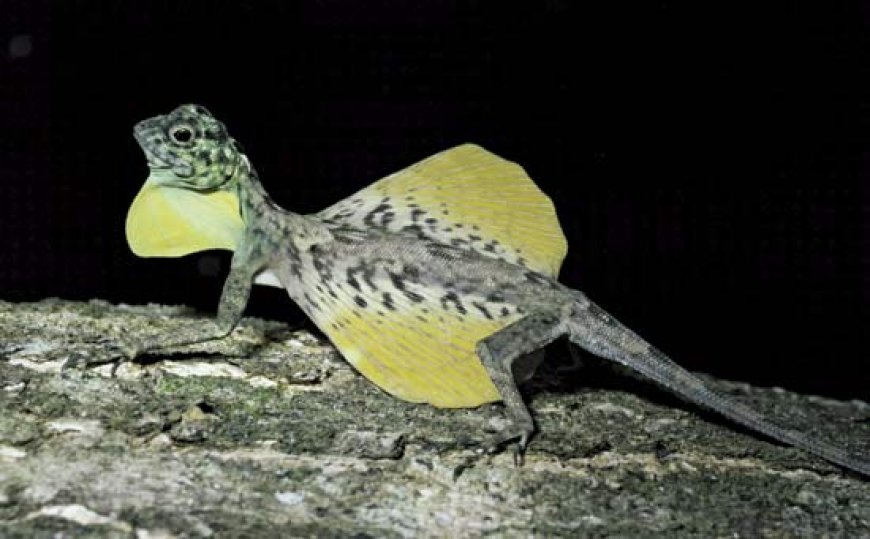
Ask someone to describe José Rizal, and you'll likely hear "writer," "doctor," or "martyr" long before anyone mentions "naturalist." Yet during his four years of exile in Dapitan, Rizal quietly built one of the more surprising chapters of his legacy: a genuine, hands-on contribution to natural science, conducted with almost no formal resources, in one of the most biodiverse corners of the Philippines.
Exile That Became a Field Study
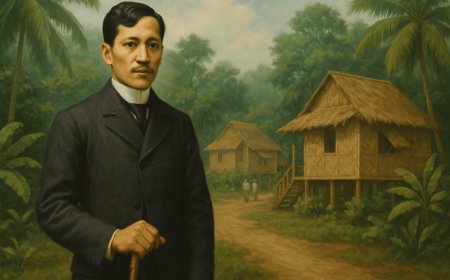
When Spanish colonial authorities exiled Rizal to Dapitan in 1892, the goal was isolation — cutting him off from Manila's political circles, the printing presses that published his work, and the intellectual networks that made him dangerous. What the colonial government hadn't accounted for was what Rizal would do with four years of forced proximity to the natural world around him.
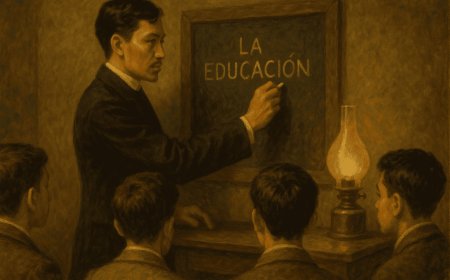
Without a laboratory, a university library, or any real scientific community to consult, Rizal turned to the only resources he had: his own training, his notes from his university years in Spain, and an environment teeming with species that had never been formally studied. Together with local students from the school he built, he began systematically collecting and documenting specimens — insects, reptiles, amphibians, shells, and plant life — cataloging the natural world of Dapitan with the same discipline he'd once applied to medicine and literature.
A Global Scientific Correspondence
Rizal didn't just collect specimens; he actively worked to have them properly identified and documented by the broader European scientific community. He corresponded extensively with the Anthropological and Ethnographical Museum in Dresden, Germany, sending shipments of snakes, insects, shells, and other specimens for professional identification — including, in one notable 1893 shipment, a dozen snakes, a seahorse, scorpions, and numerous butterflies.
This correspondence wasn't a hobbyist's occasional letter. It reflected a serious, sustained scientific relationship, with Rizal receiving detailed identification reports back from German naturalists, sometimes months later given the realities of ship-based mail at the time. In one memorable exchange, Rizal — concerned in his role as Dapitan's de facto rural doctor about whether a particular green snake was dangerous — received word from Dresden confirming it was a harmless, tree-dwelling species.
Species Named in His Honor
Rizal's contributions didn't go unnoticed by the scientific community. Several species he collected were formally named in his honor by the European naturalists who studied his specimens:
- Draco rizali — a small "flying dragon" lizard with extended, wing-like ribs allowing it to glide impressive distances between trees.
- Rhacophorus rizali — an orange-brown tree frog marked with white, yellow, or blue spots, sometimes also known as the harlequin tree frog.
- Apogonia rizali — a small beetle, notable as one of the few species discoveries where the original name attributed to Rizal has remained in consistent scientific use.
Having even one species named in your honor is considered a significant scientific distinction. Having several, while simultaneously running a medical clinic, teaching a local school, and continuing to write, places Rizal's scientific output in genuinely rare territory — accomplished not as his primary vocation, but as one part of an already remarkably full life.
Science as Another Form of Purposeful Exile
Rizal's naturalist work in Dapitan fits a broader pattern that defined his years there: rather than treating exile as a period of enforced idleness, he consistently redirected his energy toward useful, tangible contributions — a school for local children, a water system for the town, medical care for residents, and now, a genuine scientific record of the region's biodiversity.
This pattern reflects something core to Rizal's character. Even stripped of his political platform and separated from his usual intellectual circles, his instinct wasn't to withdraw, but to keep working, observing, and contributing in whatever way his circumstances allowed.
A Legacy Still Being Recognized Today
Rizal's scientific contributions have received renewed attention in recent years, including academic conferences specifically examining his work as a naturalist and ongoing conversations about eventually bringing some of the original specimens — many held in German museum collections — back to the Philippines for exhibition and further study. Some of Rizal's original specimens were unfortunately lost during the bombing of Dresden in World War II, though scientific records and subsequent taxonomic work have preserved much of what he originally documented.
Why This Chapter of His Legacy Matters
Rizal's scientific work in Dapitan complicates any attempt to reduce him to a single professional identity. He wasn't simply a writer who happened to know some science, or a doctor with a passing interest in nature — he was, by the evidence of his own correspondence and the specimens that still bear his name, a genuinely engaged, methodical contributor to natural science, achieved under some of the most restrictive circumstances of his life.
In many ways, this quieter scientific legacy reflects the same underlying philosophy found throughout Rizal's more famous work: a belief that careful observation, rigorous documentation, and genuine curiosity are valuable pursuits in their own right — regardless of whether anyone is watching, or whether the person pursuing them is officially free to do so.