Rizal's Annotations to Morga's Sucesos de las Islas Filipinas
At the British Museum in London, José Rizal hand-copied and annotated Antonio de Morga's 1609 chronicle Sucesos de las Islas Filipinas, publishing his own edition in Paris in 1890. Through extensive footnotes, he argued that pre-colonial Philippine society was sophisticated and self-sufficient, directly countering colonial narratives that portrayed Filipinos as needing to be civilized by Spanish rule. Discover how José Rizal's annotated edition of Morga's Sucesos de las Islas Filipinas, researched at the British Museum, worked to restore Filipino historical dignity by challenging colonial narratives about pre-colonial society.
 Moderator - Tomas Kauer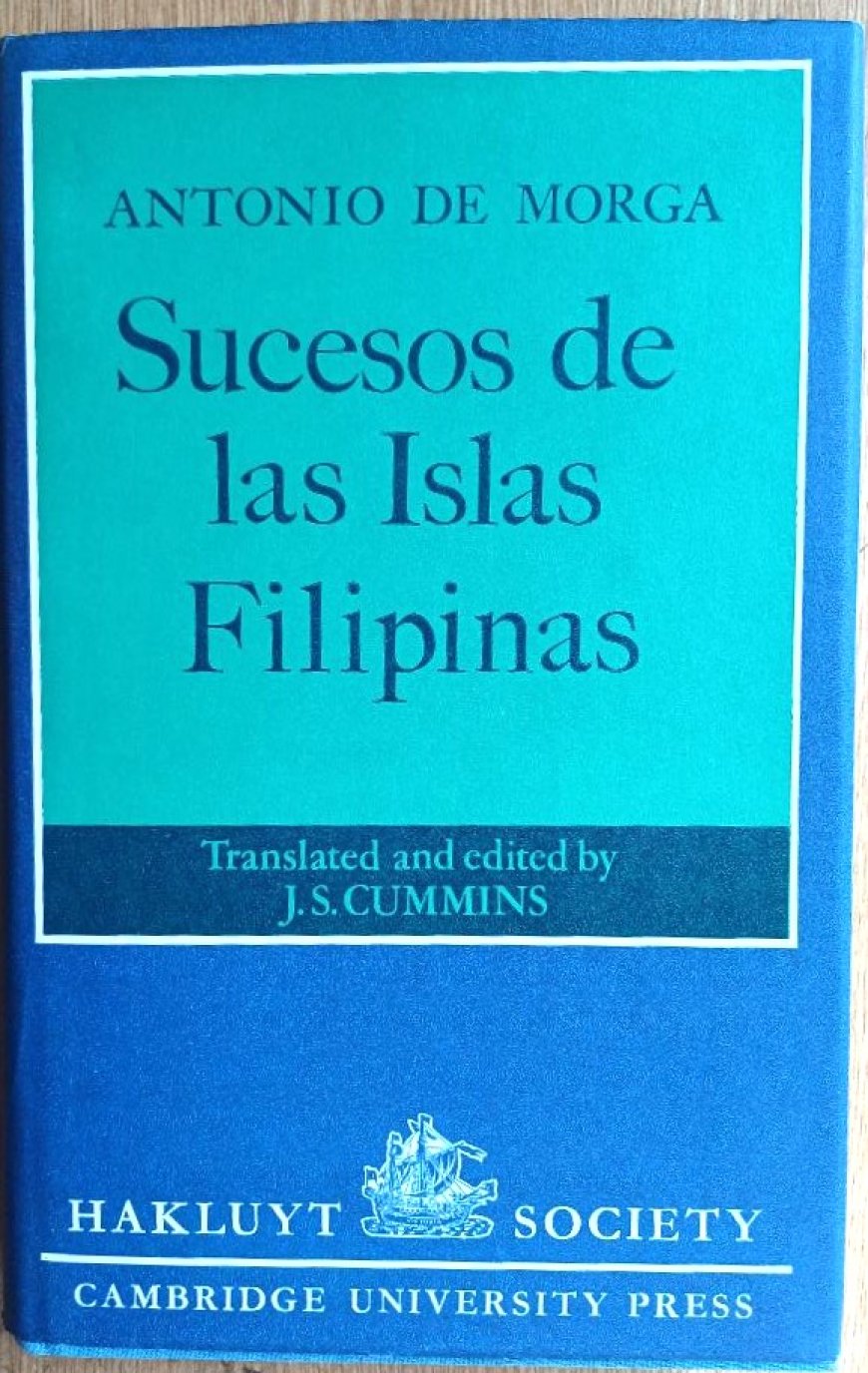
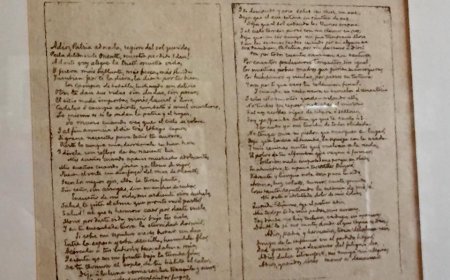
Not every act of resistance looks like a novel or a protest. Sometimes, it looks like a man spending months in a museum reading room, painstakingly hand-copying a 351-page, centuries-old book, page by page, simply to correct the historical record. That's exactly what José Rizal did with Antonio de Morga's Sucesos de las Islas Filipinas, transforming an obscure 17th-century Spanish chronicle into one of his most quietly radical contributions to Filipino identity.
A Childhood Curiosity, Rediscovered
Rizal's interest in Morga's work actually began decades before he ever set foot in the British Museum. As a child, he had heard about the book from his uncle, José Alberto, who had learned of its existence through a visit from the English governor of Hong Kong. That early, secondhand mention of an old Spanish account of the Philippines apparently stayed with Rizal for years, eventually leading him to seek out one of the few surviving copies once he had the resources and access to do so.
Research at the British Museum
Between 1888 and 1890, Rizal spent several months in London, partly to improve his English and partly to conduct serious historical research. Boarding with the Beckett family in Primrose Hill, he was granted a reader's pass to the British Museum, where he located an original copy of Morga's Sucesos de las Islas Filipinas, first published in Mexico in 1609.
Rather than simply reading and summarizing the text, Rizal committed to an extraordinarily thorough approach: he hand-copied the entire 351-page work himself, immersing himself completely in Morga's original account of Spanish colonization, warfare, diplomacy, and religious conversion in the Philippines.
Why Rizal Chose This Particular Book
Rizal's choice of Morga's chronicle wasn't random. Unlike many Spanish colonial accounts, which tended to portray the Philippines primarily through the lens of "civilizing" a supposedly primitive people, Morga's work — written by a former high-ranking colonial official with direct administrative experience in the islands — offered a comparatively detailed, systematic account of political, social, and economic life. This made it a uniquely useful foundation for Rizal's real goal: not simply publishing an old text, but using it to reconstruct and highlight the sophistication of pre-colonial Philippine society, before centuries of colonial narrative had a chance to flatten or dismiss it.
Publishing the Annotated Edition
After finishing his research in London, Rizal initially sought a publisher through a fellow Filipino contact, only to have the arrangement fall through unexpectedly. Undeterred, he brought the manuscript to Paris, where printing costs were more manageable, and had it published himself in 1890 under the full title Sucesos de las Islas Filipinas por el Doctor Antonio de Morga. He asked his close friend Ferdinand Blumentritt to write the introduction, further tying the project to the same intellectual partnership that shaped so much of his other scholarly work during this period.
What the Annotations Actually Argued
Rizal's contribution wasn't limited to simply reprinting Morga's centuries-old text. His extensive footnotes and commentary served several purposes: clarifying and expanding on details Morga had left vague, challenging or refuting claims Rizal believed were inaccurate or biased, and cross-referencing the credibility of Morga's original sources.
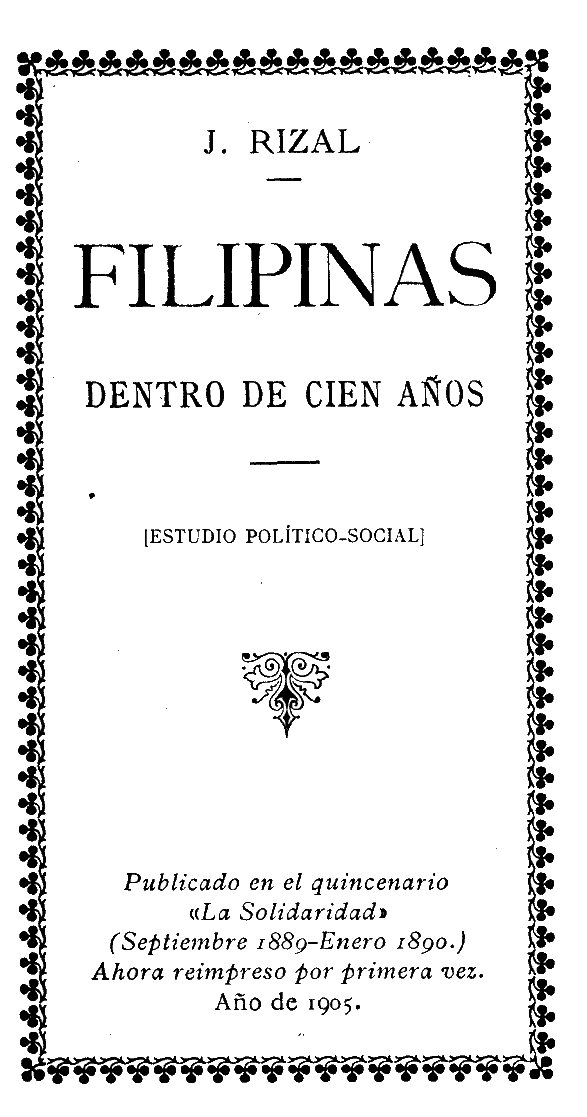
Through these annotations, Rizal built a broader argument that pre-colonial Filipino society was organized, economically self-sufficient, and culturally sophisticated — directly countering the colonial narrative that had framed the Spanish arrival as a purely civilizing force acting upon a primitive, disorganized people. This work directly complemented the argument Rizal would make in his essay Sobre la Indolencia de los Filipinos, published around the same period: that any perceived deficiencies in Filipino society were the product of colonial conditions, not some inherent, pre-existing inferiority.
A Gift to the Filipino People
Rizal dedicated this annotated edition directly to the Filipino people, framing the project explicitly as an effort to help his countrymen reconnect with a history that colonial narratives had obscured or distorted. It wasn't written primarily for European scholars or colonial administrators — though it would certainly reach them — but as an act of historical restoration aimed at Filipinos themselves, many of whom had grown up with little access to any account of their own pre-colonial past beyond what colonial education chose to teach them.
Why This Work Still Matters
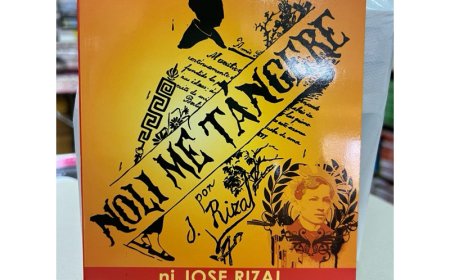
Rizal's annotated edition of Morga's Sucesos de las Islas Filipinas rarely receives the same attention as his novels, but it represents an equally important dimension of his broader project: reclaiming Filipino history and identity from a narrative largely written by, and for, the colonizers themselves. Where Noli Me Tángere and El Filibusterismo exposed the present-day abuses of colonial rule, the Morga annotations worked to restore a sense of dignity to the Filipino past — proving, through careful historical scholarship rather than fiction, that Filipino society had never been the blank, primitive slate colonial narratives so often claimed it to be.