Rizal on Reform vs. Revolution: The Peaceful Path He Chose
José Rizal favored peaceful reform over armed revolution, believing that lasting freedom required an educated, prepared population rather than a hasty uprising. Through the Propaganda Movement, La Liga Filipina, and his deliberate distance from the Katipunan, he consistently chose the pen over the sword — even as his own writing in El Filibusterismo revealed his understanding of why others might choose differently. Explore José Rizal's belief in peaceful reform over armed revolution. Discover how his writings, organizations, and deliberate distance from the Katipunan reflected his conviction that lasting freedom required preparation, not just uprising.
 Moderator - Tomas Kauer
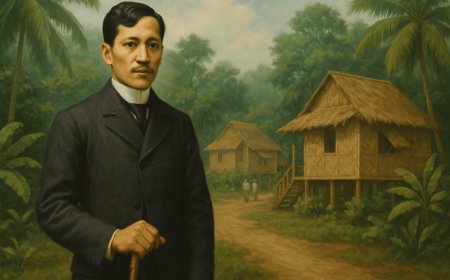
Few questions define José Rizal's legacy as sharply as this one: why did a man so clearly aware of colonial injustice, so willing to risk his own safety in confronting it, ultimately choose the pen over the sword? Understanding Rizal's stance on reform versus revolution reveals not just a political strategy, but a deeply considered philosophy about how lasting change actually happens — and why he believed rushing toward revolution without preparation could do more harm than good.
A Reformist, Not a Revolutionary — At Least in Practice
Throughout most of his adult life, Rizal firmly aligned himself with the Propaganda Movement, a group of Filipino intellectuals and activists based largely in Spain who pursued change through legal, peaceful means. Their goals were specific and, in theory, achievable within the existing colonial framework: Filipino representation in the Spanish Cortes, equal treatment under the law, secularization of parishes to reduce excessive friar control, and freedom of the press and assembly.
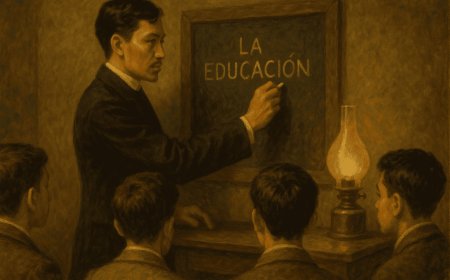
Rizal believed these reforms, if achieved, could meaningfully improve Filipino life without the enormous human cost of armed conflict. His chosen weapon in this fight was his writing — using Noli Me Tángere, El Filibusterismo, and his numerous essays to expose injustice and build public pressure for change, both among Filipinos and within Spain itself.
Why Rizal Favored Reform
Rizal's preference for reform wasn't naive optimism — it was grounded in genuine concern about what an unprepared revolution might produce. In his essay Filipinas Dentro de Cien Años, he predicted that Spanish colonial rule would likely end eventually, but he expressed real worry about what would follow. He feared that without adequate education, civic maturity, and unified leadership, Filipinos might simply trade one form of oppression for another — whether through internal instability or vulnerability to a different foreign power.
This is central to understanding Rizal's philosophy: he wasn't opposed to eventual independence. He was cautious about the process, believing that a population needed to be properly prepared — educated, organized, and civically responsible — before independence could result in a genuinely just and stable nation.
The Limits of Reform: What El Filibusterismo Reveals
Rizal's confidence in peaceful reform wasn't absolute, and his own writing shows him wrestling with its limitations. El Filibusterismo, his darker, more radical second novel, introduces Simoun — a character who has abandoned peaceful methods entirely in favor of plotting violent revolt, driven by years of accumulated injustice and personal loss.
Rizal doesn't fully endorse Simoun's path, but he also doesn't dismiss it outright. By giving voice to Simoun's rage and disillusionment so convincingly, Rizal demonstrated a clear-eyed understanding of why others might abandon reform for revolution — even as he personally continued to advocate for a different approach. This tension reflects Rizal's honesty as a thinker: he could acknowledge the emotional and moral pull of revolutionary anger without necessarily accepting it as the correct path forward.
La Liga Filipina: Reform in Practice
When Rizal returned to the Philippines in 1892, he attempted to translate his reformist philosophy into direct action by founding La Liga Filipina, an organization aimed at uniting Filipinos through mutual aid, education, and lawful advocacy for reform. The organization's goals were deliberately moderate — promoting unity, commerce, education, and defense against abuse through legal means, rather than armed resistance.
La Liga Filipina was short-lived, disbanding almost immediately after Rizal's arrest and exile to Dapitan, but it stands as a clear example of how seriously he took the reform path — not just as rhetoric in his novels, but as an actual organizational structure meant to create tangible, peaceful change.
Rizal and the Katipunan: A Deliberate Distance
Rizal's commitment to peaceful reform is perhaps most clearly illustrated by his relationship — or rather, lack of direct involvement — with the Katipunan, the revolutionary organization founded by Andrés Bonifacio that eventually launched the armed Philippine Revolution in 1896. While Bonifacio and other Katipunan members were significantly influenced by Rizal's writings, Rizal himself did not endorse or participate in their plans for armed uprising.
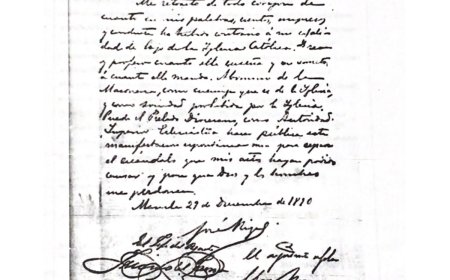
In fact, when representatives of the Katipunan reportedly sought his support for the planned revolution, Rizal declined, reiterating his belief that the Philippines was not yet sufficiently prepared for the consequences of armed rebellion. This refusal, tragically, did little to protect him — he was ultimately arrested, tried, and executed on charges connected to the very revolution he had explicitly chosen not to join.
A Legacy Caught Between Two Paths
Rizal's execution in 1896 occurred just as the revolution he had cautioned against was gaining momentum, creating a complicated historical legacy. He became, in death, a symbol embraced by both reformists who admired his peaceful advocacy and revolutionaries who saw his execution as final proof that peaceful reform was never going to be enough.
This dual legacy isn't a contradiction so much as a reflection of the genuine complexity Rizal himself explored throughout his life and writing: the difficult, unresolved tension between the moral clarity of peaceful principle and the practical frustration of watching injustice persist despite it.
Why This Choice Still Matters
Rizal's preference for reform over revolution offers more than a historical footnote — it offers a case study in principled patience under enormous pressure. He wasn't blind to the appeal of revolution, nor unaware of the failures of peaceful advocacy under colonial rule. He simply believed, based on genuine strategic and moral reasoning, that lasting freedom required preparation as much as passion.
Whether or not his caution was ultimately vindicated by history remains a subject of ongoing debate. But Rizal's willingness to hold firmly to his convictions, even as more radical movements gained ground around him, remains one of the most compelling aspects of his legacy — a reminder that choosing the harder, slower path isn't always a failure of courage, but sometimes an entirely different kind of it.