Universidad Central de Madrid: Where Rizal Became a Doctor
At the Universidad Central de Madrid, José Rizal completed his medical degree, specializing in ophthalmology to fulfill his goal of helping his mother's failing eyesight. His time there also deepened his political consciousness, as he became closely involved with fellow Filipino reformists who would form the core of the Propaganda Movement. Discover how José Rizal completed his medical education at the Universidad Central de Madrid, fulfilling his promise to his mother while becoming deeply immersed in the Propaganda Movement that shaped his political awakening.
 Moderator - Tomas Kauer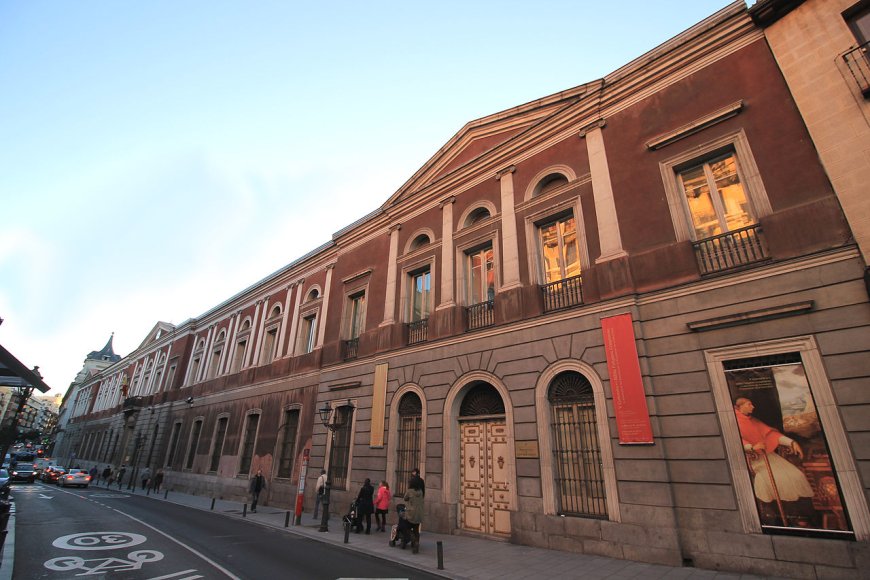
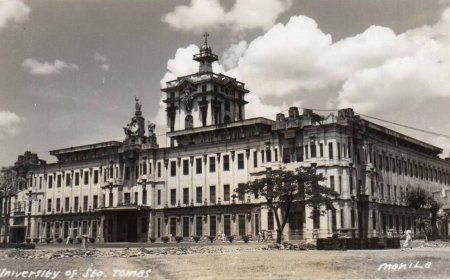
When José Rizal secretly boarded a ship bound for Spain in 1882, he was leaving behind more than just his family and homeland — he was leaving behind the limitations of a colonial education system that, in his eyes, couldn't offer him everything he needed to become the doctor, and the thinker, he wanted to be. That journey led him to the Universidad Central de Madrid, where he would finally complete the medical degree he had begun years earlier at the University of Santo Tomas, and where his political and intellectual awakening would deepen substantially.
A Secret Departure, A Deliberate Destination
Rizal left the Philippines without the full knowledge of colonial authorities, officially citing further studies as his purpose while quietly carrying with him a much broader set of ambitions. Madrid wasn't a random choice — as the capital of the very empire governing the Philippines, it represented both an intellectual center and, in a sense, enemy territory reimagined as an opportunity. Studying at the heart of the empire allowed Rizal to access resources, professors, and academic rigor unavailable to him back home, while also placing him directly among the political and intellectual currents shaping colonial policy.
Completing His Medical Degree
At the Universidad Central de Madrid, Rizal continued the medical education he had started in Manila, ultimately earning his Licentiate in Medicine. His studies included a strong focus on ophthalmology, a specialization rooted in his personal desire to help treat his mother Teodora's failing eyesight — a motivation that had shaped his choice of medicine from the very beginning.
Beyond medicine, Rizal also pursued studies in Philosophy and Letters at the university, reflecting his characteristic refusal to limit himself to a single discipline. Even while working toward a demanding medical degree, he continued to nurture his broader intellectual interests in literature, history, and philosophy — interests that would later feed directly into his novels and essays.
A Student Among Reformists
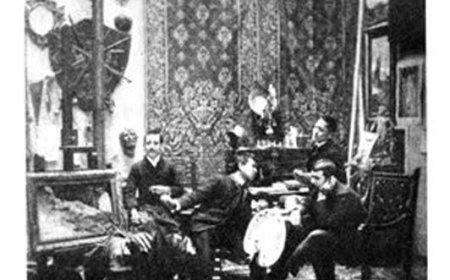
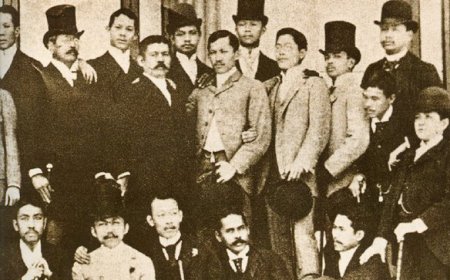
Madrid wasn't just an academic environment for Rizal — it was also where he became deeply embedded in the community of Filipino students and expatriates who would go on to form the core of the Propaganda Movement. Living and studying alongside figures like Marcelo H. del Pilar and Graciano López Jaena, Rizal found himself surrounded by peers who shared his growing frustration with colonial injustice, as well as his belief that change could be pursued through legal, peaceful advocacy rather than armed rebellion.
This environment proved formative. university life in Madrid gave Rizal not just medical training, but a political education — late-night discussions, shared grievances, and a growing sense of collective purpose among Filipino students determined to advocate for reform back home.
Academic Discipline Meets Political Awakening
It would be a mistake to think of Rizal's time at the Universidad Central de Madrid as purely academic. This period represents a critical convergence: the same rigorous, disciplined mind that mastered complex medical coursework was simultaneously absorbing political theory, historical analysis, and firsthand exposure to European liberal thought.
Rizal's time in Madrid helped sharpen the analytical, evidence-based approach that would later define his essays, including Sobre la Indolencia de los Filipinos and Filipinas Dentro de Cien Años — works that combined careful, almost clinical reasoning with a clear moral argument, not unlike the diagnostic precision expected of a trained physician.
Completing a Long-Delayed Goal
Rizal's graduation from the Universidad Central de Madrid marked the fulfillment of a goal rooted years earlier in a very personal motivation: his desire to help his mother. Though his path had taken him far beyond what he could have imagined as a young medical student at the University of Santo Tomas — through secret departures, political organizing, and the beginnings of a literary career — this chapter in Madrid represented the completion of that original promise to himself and his family.
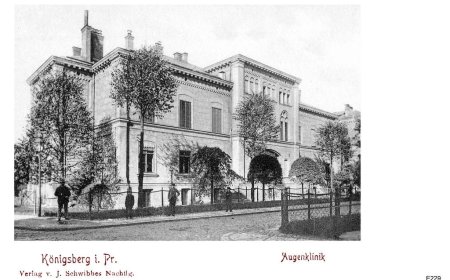
Yet even with his medical degree in hand, Rizal's education was far from over. Following his time in Madrid, he continued his studies further in Paris and Heidelberg, refining his ophthalmological expertise under some of Europe's leading specialists — proof that for Rizal, one milestone was rarely a stopping point, but simply a foundation for the next.
Why Madrid Matters in Rizal's Story
The Universidad Central de Madrid represents a pivotal chapter in Rizal's life: the place where his long-standing personal goal of becoming a doctor was finally realized, and simultaneously, the place where his political consciousness matured from private frustration into organized, collective advocacy. In Madrid, Rizal wasn't just becoming a physician — he was becoming the writer, reformist, and eventual martyr whose ideas would go on to outlive the very empire whose capital he once studied in.