Sobre la Indolencia de los Filipinos: Rebutting the Myth of Filipino Laziness
In Sobre la Indolencia de los Filipinos, José Rizal challenged the colonial stereotype that Filipinos were naturally lazy, arguing instead that limited education, unfair economic policies, and colonial discouragement of ambition produced the appearance of indolence. Published in La Solidaridad in 1890, the essay turns the accusation back on the very system that created it. Explore José Rizal's essay Sobre la Indolencia de los Filipinos, where he methodically dismantles the colonial myth of Filipino laziness, tracing it instead to systemic barriers created by Spanish rule.
 Moderator - Tomas Kauer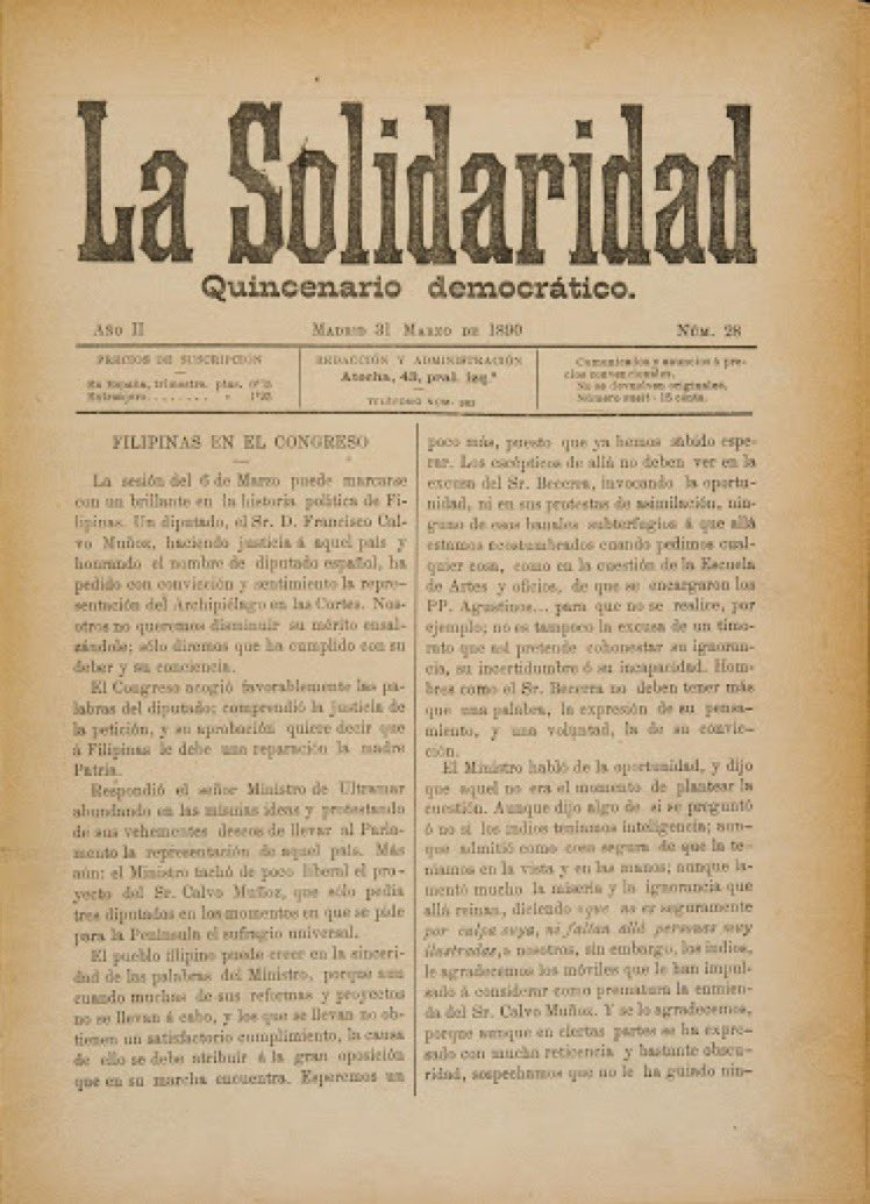
Few essays in Philippine history manage to dismantle a harmful stereotype as thoroughly, and as calmly, as José Rizal's Sobre la Indolencia de los Filipinos. Rather than responding to accusations of Filipino "laziness" with anger or denial, Rizal did something far more effective: he examined the claim methodically, traced it back to its actual root causes, and turned the accusation back on the very system that manufactured it.
The Accusation Rizal Was Responding To
During the Spanish colonial period, it was common — even fashionable — among some Spanish writers and officials to describe Filipinos as naturally indolent, lacking ambition, and disinclined toward hard work. This stereotype wasn't just casual prejudice; it served a political purpose. By framing Filipinos as inherently unmotivated, colonial authorities could justify limited investment in infrastructure, education, and economic opportunity, while simultaneously blaming Filipinos themselves for the resulting poverty and stagnation.
It was a convenient, self-reinforcing narrative — and Rizal recognized exactly how convenient it was for those in power.
Rizal's Central Argument
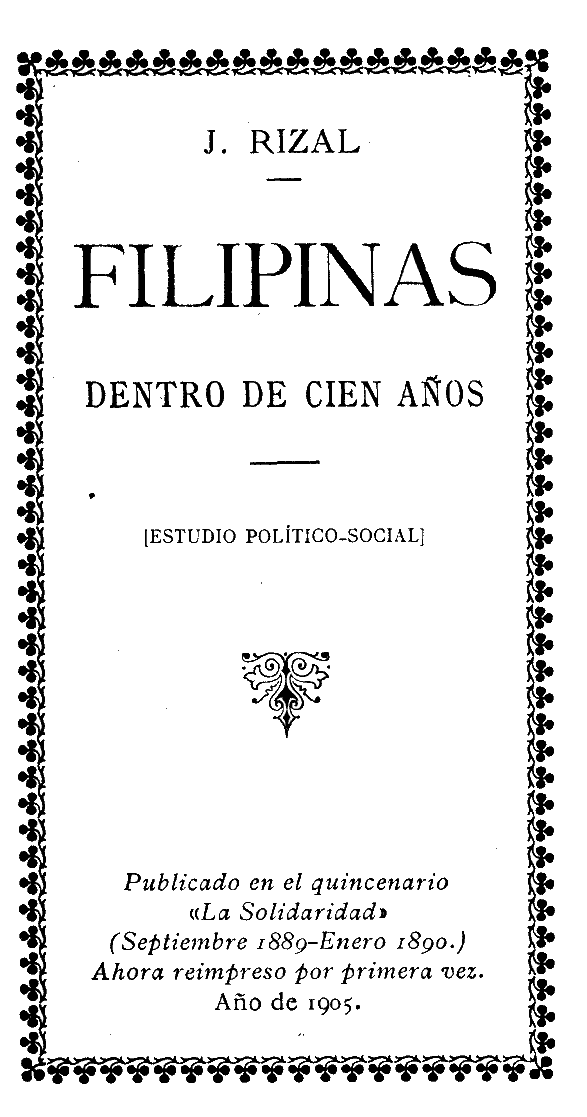
Published in installments in La Solidaridad in 1890, Rizal's essay doesn't deny that a lack of productivity or ambition might be observable in parts of Philippine society. Instead, he reframes the entire question: rather than asking "Are Filipinos lazy?" he asks, "What conditions would produce this appearance of laziness, even among a people who were clearly capable of great achievement?"
His answer is layered and carefully argued. Rizal points to a range of systemic causes, including:
- Lack of educational opportunity, which limited the ability of Filipinos to pursue skilled, ambitious work.
- Unfair economic structures, where hard work often went unrewarded due to exploitative taxation, forced labor policies, and limited access to land ownership.
- Health and environmental factors, including tropical climate conditions and diseases that colonial policy did little to address.
- A demoralizing colonial atmosphere, in which initiative and ambition were often actively discouraged or punished rather than rewarded, especially if they threatened colonial or religious authority.
Taken together, Rizal argues that what critics called "indolence" was not a natural trait, but a produced condition — the logical result of a system designed to limit opportunity while simultaneously blaming its victims for the outcome.
Turning the Argument Back on the Colonizers
Perhaps the most striking part of Rizal's essay is how he uses historical evidence to argue that Filipinos were not indolent prior to Spanish colonization. He points to accounts of pre-colonial Philippine society — organized, industrious, and engaged in active trade — as evidence that whatever "laziness" existed afterward was not an inherent trait, but something that developed under specific colonial conditions.
This argument aligns closely with the broader historical project Rizal pursued in his annotations to Antonio de Morga's Sucesos de las Islas Filipinas, where he similarly worked to counter colonial narratives by highlighting the sophistication of pre-colonial Filipino society.
Why This Essay Still Resonates
What makes Sobre la Indolencia de los Filipinos remarkable isn't just its historical argument — it's the underlying logic, which remains relevant far beyond its original context. Rizal's core insight, that systemic barriers can produce outcomes that get unfairly blamed on the character of the people experiencing them, is an argument that continues to echo in discussions of poverty, inequality, and social stereotypes around the world.
Rather than accepting a narrative handed down from those in power, Rizal modeled a different approach: examine the actual conditions people are working within before passing judgment on their character. It's a quietly radical idea, delivered with the measured, evidence-based tone of a scholar rather than the anger of a man defending his people against insult — which, in many ways, made the argument even harder to dismiss.
Legacy
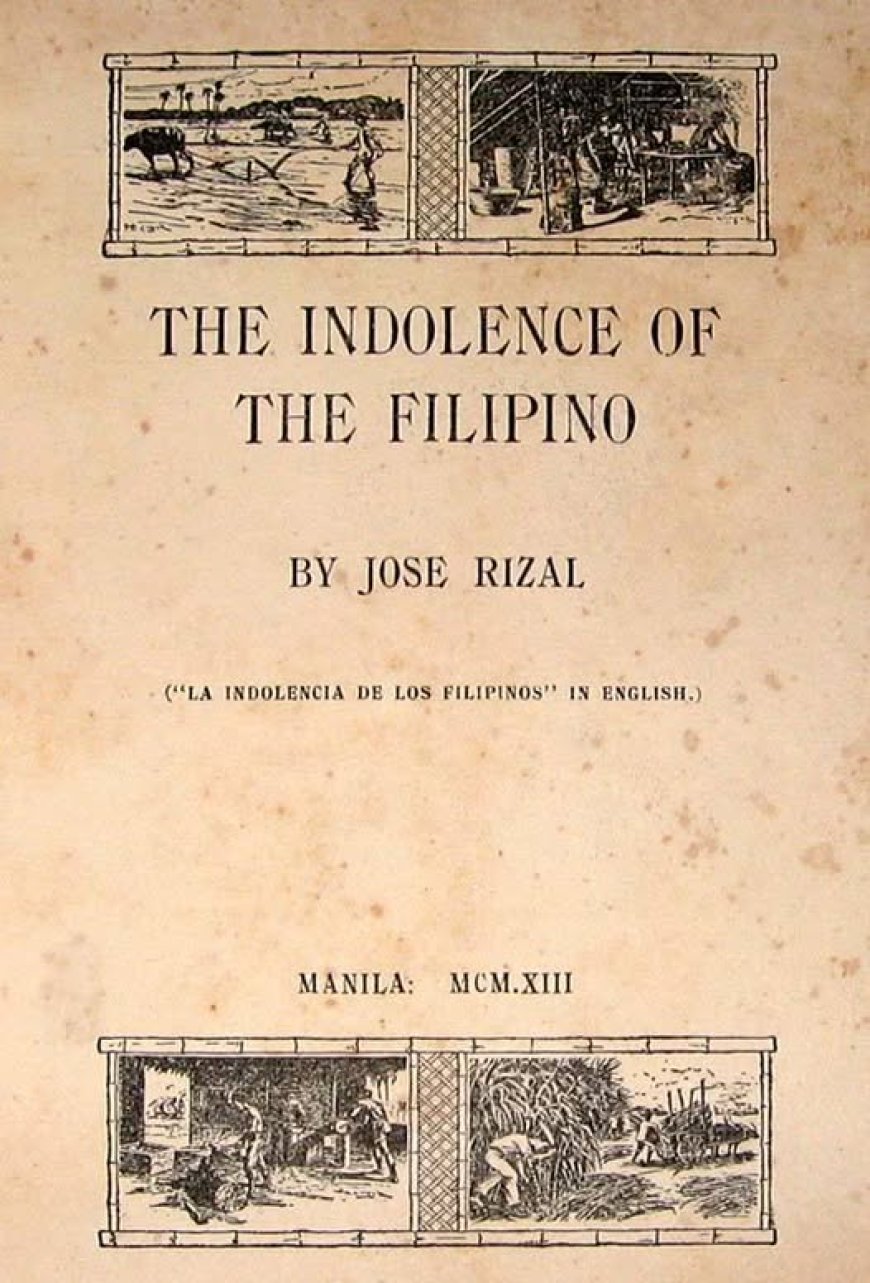
Sobre la Indolencia de los Filipinos remains one of Rizal's most important essays, studied not just as a historical document, but as an early example of systemic analysis applied to colonial inequality. It stands as a reminder that Rizal's fight against colonial rule wasn't only fought through fiction — his essays carried just as much intellectual weight, methodically dismantling the justifications colonial powers used to excuse the very conditions they had created.