José Rizal: The Life, Family, Education, and Legacy of the Philippine National Hero
José Rizal (1861–1896) was a Filipino polymath — doctor, writer, linguist, and scientist — whose novels Noli Me Tángere and El Filibusterismo exposed the abuses of Spanish colonial rule and helped awaken Filipino national consciousness. Educated in Manila, Madrid, Paris, and Heidelberg, he believed reform should come through education rather than violence. He was executed by the Spanish colonial government on December 30, 1896, at age 35, and is now honored as the Philippines' National Hero. Discover the life of José Rizal — from his childhood in Calamba, Laguna, to his education across Europe, his personality and passions, and the writings that helped spark a revolution. This article covers his biography, family background, academic journey, character, complete timeline, and lasting legacy as the National Hero of the Philippines.
 Moderator - Tomas Kauer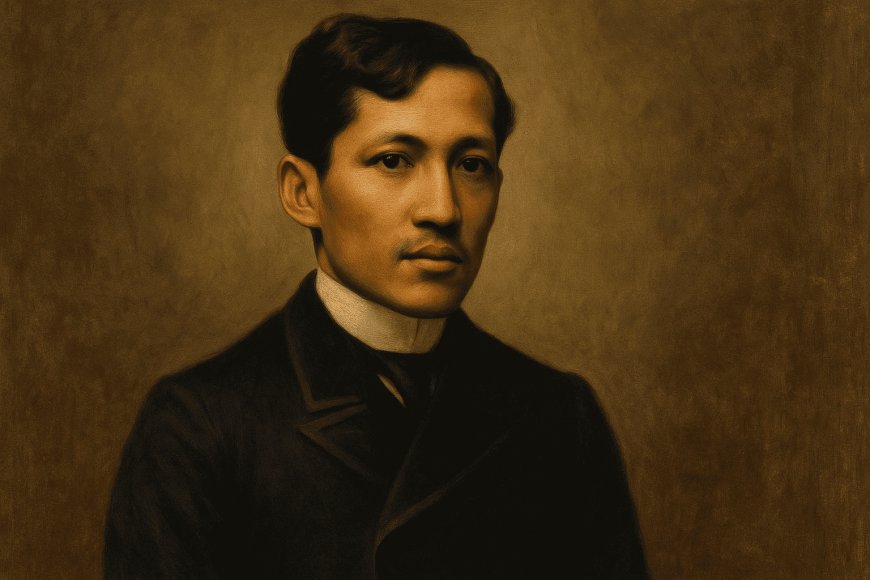
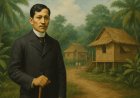
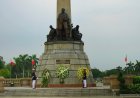
When most people hear the name José Rizal, the first thing that comes to mind is usually a statue in Luneta, or maybe his face on a peso coin, or a portrait hanging in a classroom. But behind the monuments and the currency was a real person — someone with dreams, fears, love, and a deep ache for his country. This article takes a closer look at his life: his birth, his education, the kind of person he was, and the legacy he left behind that people are still talking about more than a century later.
Early Life and Family
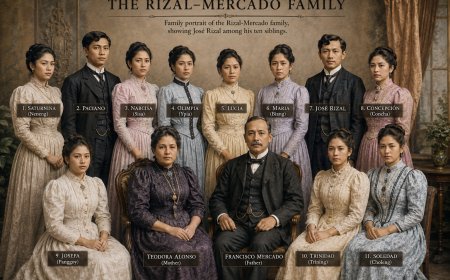
José Protasio Rizal Mercado y Alonso Realonda was born on June 19, 1861, in Calamba, Laguna. He was the seventh of eleven children born to Francisco Mercado Rizal and Teodora Alonso Realonda — a couple known for placing enormous value on education, discipline, and faith.
The Rizal family could be described as middle class for the period. They owned some land and also leased farmland from the Dominican friars. They weren't poor, but they weren't landed gentry either. That in-between position mattered: it's part of why Rizal grew so sensitive to the abuse of tenant farmers and ordinary citizens — his own family experienced it firsthand when they were sued and nearly forced off the land they farmed.
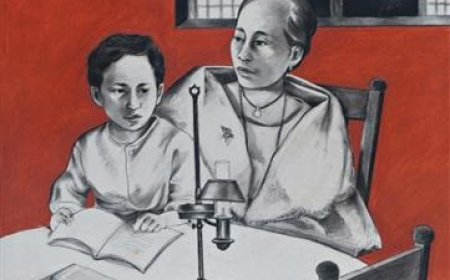
His mother, Teodora, was remarkably well-educated for a woman of her time. She was Rizal's first teacher — she taught him to read and write, and by most accounts, he could already read before he ever set foot in a formal classroom.
Education: A Life Built Around Learning
If there's one trait that truly defines Rizal, it's his relentless hunger to learn. Here's how his education unfolded:
Early schooling. Even before formal school, he had already picked up letters and numbers from his mother. At six years old, he studied privately under various tutors in Calamba and Biñan.
Ateneo Municipal de Manila. In 1872, at just eleven years old, Rizal entered the Ateneo Municipal de Manila. He earned his Bachelor of Arts there in 1877, graduating with highest honors.
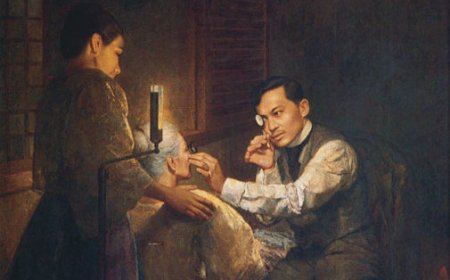
University of Santo Tomas. He studied Philosophy and Letters, then moved into Medicine, specializing in ophthalmology — largely because his mother was losing her eyesight.
Studies abroad. In 1882, he secretly sailed for Spain — without his family's or the authorities' knowledge — to continue his medical studies at the Universidad Central de Madrid. There he also took courses in Philosophy and Literature. His education didn't stop in Spain: he went on to study in Paris and later in Heidelberg, Germany, where he completed his training in ophthalmology under the renowned Dr. Otto Becker.
Beyond formal degrees, Rizal was famously a polyglot — reportedly fluent in more than twenty languages, including Spanish, English, French, German, Italian, Latin, and even Japanese and Russian. He wasn't just a doctor; he was also a sculptor, painter, writer, scientist, and, in his own way, something of an engineer.
Rizal's Personality
One thing that often gets lost in the history-book version of Rizal is who he actually was as a person. He wasn't just a serious scholar — he was observant, disciplined, and, in many ways, quietly romantic.
- Hardworking and disciplined. No matter how many fields he stepped into — medicine, linguistics, the sciences — he gave each one his full attention and rigor.
- Critical but composed. Despite his strong opposition to the abuses of Spanish colonial rule, he chose the pen over the sword. His approach to reform was rooted in education and awareness, not violence.
- Creative. Beyond writing, he loved drawing, sculpting, and tinkering with small scientific experiments.
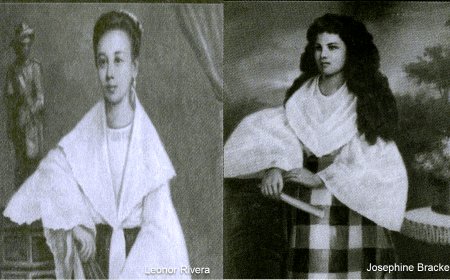
- Emotional and romantic. Even in the middle of his mission for his country, there was room in his heart for love — from Leonor Rivera to several other women who came into his life across different countries and chapters of his story.
- Humble. Despite everything he knew and accomplished, he never carried himself with arrogance. Instead, he used his knowledge in service of ordinary Filipinos and their rights.
Timeline of Rizal's Life
- 1861 – Born in Calamba, Laguna, on June 19.
- 1872 – Enters the Ateneo Municipal de Manila.
- 1877 – Graduates with a Bachelor of Arts from the Ateneo; begins Medicine at UST.
- 1882 – Sails for Spain to continue his studies.
- 1884–1885 – Completes his medical degree at the Universidad Central de Madrid.
- 1886 – Studies in Heidelberg, Germany, under Dr. Otto Becker in ophthalmology.
- 1887 – Publishes Noli Me Tángere in Berlin — a novel exposing the abuses of Spanish colonial rule.
- 1888–1889 – Travels through the United States, England, and other countries, continuing his research and writing.
- 1891 – Publishes El Filibusterismo, the sequel to Noli Me Tángere.
- 1892 – Returns to the Philippines and founds La Liga Filipina, an organization aimed at peaceful social reform.
- 1892 – Exiled to Dapitan after being accused of inciting rebellion against the Spanish government.
- 1892–1896 – While in exile in Dapitan, he builds a school, sets up a water system for the town, and continues his scientific work.
- 1896 – The Philippine Revolution begins, led by the Katipunan.
- 1896 – Rizal is arrested and tried on charges of sedition, rebellion, and conspiracy, despite having no direct involvement in the armed uprising.
- December 30, 1896 – Rizal is executed by firing squad in Bagumbayan (now Rizal Park, or Luneta) at the age of 35.
Legacy and Contributions
Rizal's greatest contribution wasn't a weapon — it was the written word. Through his novels, essays, and letters, he exposed the injustices Filipinos endured under colonial rule, not through anger, but through truth and reasoned argument.
His belief that real freedom begins with education and awareness went on to inspire the movements that followed, including the Philippine Revolution, even though he himself never called for an armed uprising. He also proved to the world that a Filipino could stand shoulder to shoulder with the scholars and scientists of Europe — something that, at the time, the colonizers considered unthinkable.
Because of all this, Rizal is officially recognized as the National Hero of the Philippines, and his death every December 30 is commemorated as Rizal Day — a yearly occasion to remember not just his heroism, but his example as someone who never stopped learning, reflecting, and serving others.
In the end, José Rizal's story isn't just about a hero who died for his country — it's also about a man who believed that real change begins in the mind, long before it ever reaches the battlefield.