Fort Santiago and the Rizal Shrine in Intramuros
Fort Santiago in Intramuros was the site of José Rizal's final imprisonment before his execution in 1896. Today, the Rizal Shrine within the fort preserves his reconstructed cell and the bronze footprints tracing his final walk to Bagumbayan, offering visitors a direct connection to the last days of his life. Visit Fort Santiago and the Rizal Shrine in Intramuros, Manila, where José Rizal spent his final imprisonment, wrote his last letters, and walked his final path to execution in 1896.
 Moderator - Tomas Kauer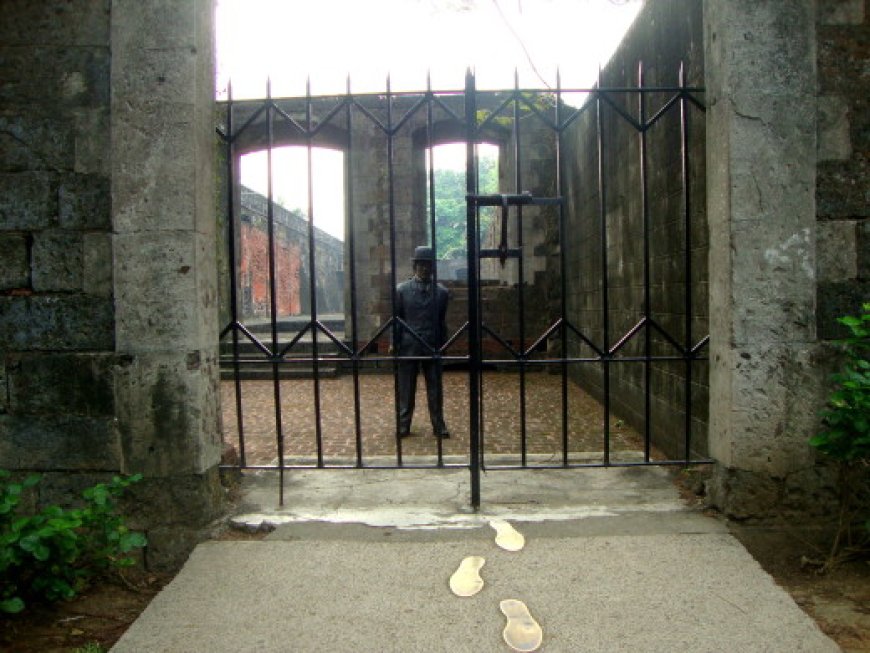
Of all the places connected to José Rizal's life, few carry as much emotional weight as Fort Santiago. It wasn't where he was born, nor where he built his legacy through years of study and writing. It was where his story came to its final, painful conclusion, the site of his last imprisonment, his last night, and the walk that led him to his execution. Today, the fort houses the Rizal Shrine, preserving that final chapter for the generations who came after him.
A Fortress With a Long History Before Rizal
Fort Santiago predates Rizal by centuries. Built by the Spanish as a defensive citadel at the mouth of the Pasig River, within the walled city of Intramuros, it served for generations as a military stronghold and, at various points, a prison for those the colonial government considered threats to its authority. By the time Rizal was brought there in 1896, the fort had already functioned as a place where dissent was contained, making it a fitting, if grim, final chapter for a man whose writing had directly challenged that same colonial authority.
Rizal's Final Imprisonment
Rizal was brought to Fort Santiago following his arrest in late 1896, held there through his trial on charges of rebellion, sedition, and conspiracy, charges connected to the Philippine Revolution despite his own consistent advocacy for peaceful reform rather than armed uprising. He spent his final weeks within the fort's walls, culminating in his last night on December 29, 1896, when he wrote his final letters and composed his now-famous farewell poem, later known as Mi Último Adiós.
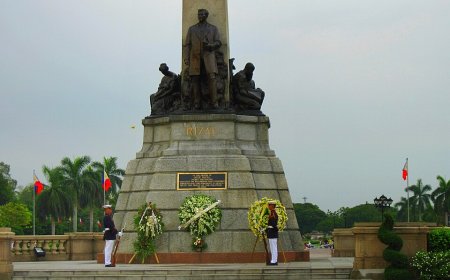
It was from Fort Santiago that Rizal made his final walk to Bagumbayan, now Rizal Park, on the morning of December 30, 1896, where he was executed by firing squad. This walk, and the fort itself, have since become deeply symbolic, marking the transition from imprisonment to martyrdom in the story that would eventually elevate Rizal to national hero status.
The Rizal Shrine Today
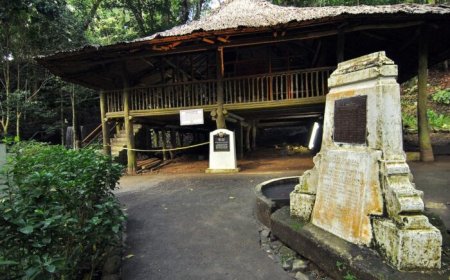
The Rizal Shrine, housed within Fort Santiago, preserves and interprets this final chapter of his life. The shrine includes a reconstruction of Rizal's actual prison cell, offering visitors a direct, physical connection to the space where he spent his last days. Exhibits throughout the shrine display personal items, original documents, and historical artifacts related to his imprisonment, trial, and execution.
One of the most striking features of the site is a set of bronze footprints embedded in the pavement, tracing the exact path Rizal walked from his cell to the execution site at Bagumbayan. Visitors can follow this same path today, a quiet, physically immersive way of connecting with the final hours of his life.
More Than a Single Story
While Fort Santiago's connection to Rizal is its most widely known historical association, the fort's broader history reflects centuries of Philippine colonial and wartime history beyond Rizal alone, including its later use during the Japanese occupation in World War II. This layered history adds additional weight to the site, situating Rizal's story within a much longer pattern of resistance, imprisonment, and struggle that played out within the same fortress walls across different eras.
Visiting Fort Santiago and the Rizal Shrine
Located within the historic walled city of Intramuros in Manila, Fort Santiago remains one of the most visited heritage sites in the Philippines, drawing students, historians, and travelers alike. Many visitors pair a trip to the Rizal Shrine with a broader tour of Intramuros, connecting Rizal's final days to the wider colonial-era architecture and history that surrounds the fort.
For many Filipinos, walking through Fort Santiago and the Rizal Shrine offers something textbooks alone cannot: a direct, physical sense of scale, standing in the same cell, walking the same path, and understanding in a more visceral way what those final days actually meant for the man who would go on to become the country's national hero.
Why This Site Still Matters
Fort Santiago represents the place where Rizal's public life and private courage converged most intensely, where a man facing certain death chose to spend his final hours writing rather than despairing, and where that quiet act of defiance was smuggled out through nothing more than a small alcohol lamp handed to his sister. The Rizal Shrine's preservation of this site ensures that visitors don't just read about this moment in history, they can stand within it, tracing the same steps that led from imprisonment to a legacy that has now outlasted the empire that once held him captive within these walls.
Note: Visiting hours, entrance fees, and current exhibits at Fort Santiago and the Rizal Shrine may change over time. We recommend checking with the Intramuros Administration or the National Historical Commission of the Philippines for up-to-date visitor information.