Mi Último Adiós: The Poem Hidden in a Lamp
On the night before his execution, José Rizal wrote Mi Último Adiós, a farewell poem hidden inside an alcohol lamp and smuggled out by his sister Trinidad. Composed under the shadow of certain death, the poem reflects on love of country, sacrifice, and peace with mortality, and remains one of the most studied works of Filipino literature. Discover the story behind Mi Último Adiós, José Rizal's final poem, hidden inside a lamp and smuggled out of his prison cell the night before his execution — a farewell that has endured for over a century.
 Moderator - Tomas Kauer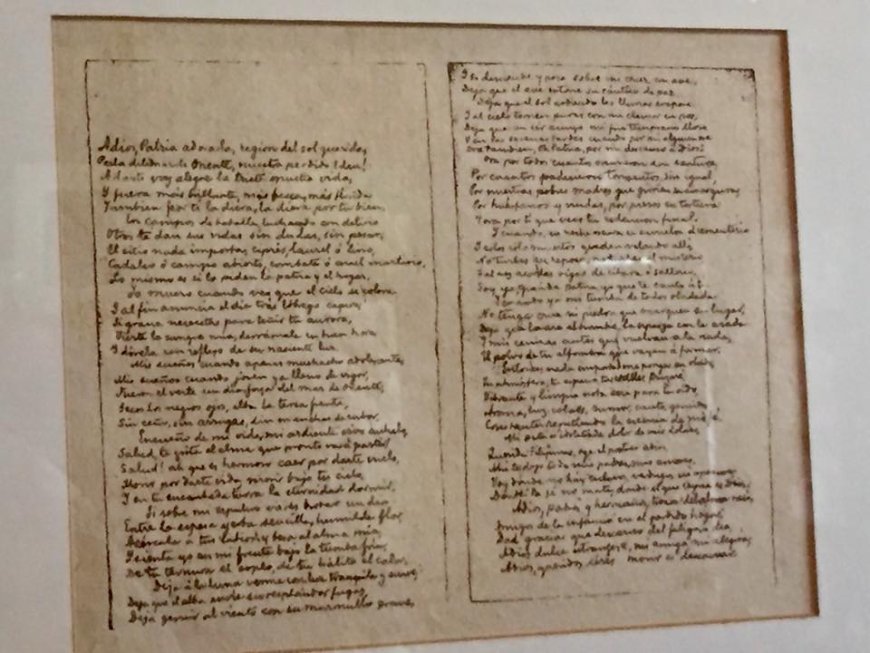
Some of history's most powerful words were never meant to be discovered right away. On the night before his execution, José Rizal composed what would become his most enduring literary work — not for publication, not for public acclaim, but as a final, private farewell smuggled out of his prison cell in the most unassuming way imaginable: hidden inside a small alcohol lamp.
Written in the Shadow of Death
On December 29, 1896, in his cell at Fort Santiago, Rizal spent his final hours composing an untitled poem — fourteen five-line stanzas written in Spanish, reflecting on his life, his love for his country, and his acceptance of the death awaiting him the next morning. He wrote it on a small sheet of paper, without a title, without any indication that it was meant to survive beyond that night.
The poem later became known as Mi Último Adiós ("My Last Farewell"), a title given to it after his death, since Rizal himself left it unsigned and untitled — a final piece of writing composed not as a public statement, but as something closer to a private reckoning with everything he was about to leave behind.
Smuggled Out in an Alcohol Lamp
During one of his final visits from family members on the night before his execution, Rizal quietly handed his sister Trinidad a small alcohol lamp, telling her in Tagalog that there was something inside it — without drawing attention to what that something actually was. Hidden within the lamp was the folded poem, smuggled past prison guards in an object simple and unremarkable enough to avoid suspicion.
Had the poem been discovered by colonial authorities, it almost certainly would have been confiscated and destroyed, given its unmistakably patriotic content. Instead, because of Trinidad's careful, discreet handling of her brother's final gift, the poem survived the very system that had just sentenced its author to death.
What the Poem Says
Mi Último Adiós moves through a complex range of emotions rather than settling into simple grief or defiance. Rizal writes of his love for his homeland, comparing his sacrifice to a life willingly given for their sake. He reflects on death not with despair, but with a kind of hard-won peace, expressing hope that his death might serve a purpose larger than himself — nourishing the soil of the country he loved, both literally and symbolically.
The poem also includes tender farewells to family, friends, and the people of the Philippines more broadly, along with reflections on faith and the afterlife. Rather than reading as a purely political statement, it reads as something more intimate: a man making peace with mortality while still holding firmly to the ideals that brought him to this final moment.
Execution and Publication
Rizal was executed by firing squad the following morning, December 30, 1896, at Bagumbayan. In the aftermath, the poem's existence gradually became known, and it was later published and translated into numerous languages, becoming one of the most widely read and analyzed pieces of Filipino literature in history.
Because Rizal left the poem untitled, different early publishers and historians assigned it different names before Mi Último Adiós became the widely accepted standard title — a small but telling reminder that even the poem's most basic identifying detail was decided by those who came after him, based on their understanding of what the poem meant.
A Poem That Transcends Its Origins
What makes Mi Último Adiós so remarkable isn't just the circumstances of its creation, though those alone would be extraordinary. It's the quality and depth of the writing itself — composed under the most extreme psychological pressure imaginable, by a man who knew with certainty he would be dead within hours, yet still produced something carefully structured, emotionally nuanced, and deliberately crafted rather than hastily scrawled.
This combination — the poem's literary sophistication paired with the almost unbearable weight of its circumstances — is part of why it continues to be studied, translated, and memorized by students across the Philippines more than a century later.
Why This Story Still Resonates
The story of Mi Último Adiós is, in many ways, a story about two forms of courage happening simultaneously: Rizal's courage in using his final hours to write something meaningful rather than succumbing to fear or despair, and Trinidad's quiet courage in carrying his last words safely out of a heavily guarded prison, entrusted with a responsibility she couldn't have fully known the historical weight of at the time.
Together, brother and sister ensured that Rizal's final voice wasn't silenced along with his execution — a testament to the idea that even in a system designed to erase dissent, determined and careful people can still find a way to make sure the truth survives.