Rizal the Polyglot: How He Mastered More Than Twenty Languages
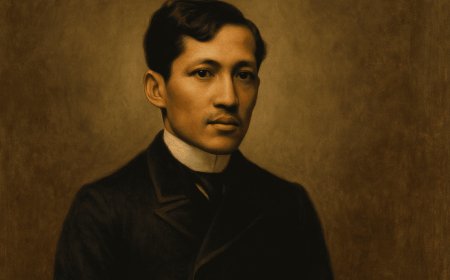
José Rizal was reportedly fluent in twenty-two languages, including Tagalog, Spanish, German, French, Japanese, Sanskrit, and several Philippine regional languages. Far from a mere talent, his linguistic range allowed him to study directly under European professors, research original historical texts, and build an international network of scholarly relationships without relying on translation. Discover how José Rizal mastered more than twenty languages, from his early education at the Ateneo to his scientific and literary work across Europe, and how this linguistic range became a powerful tool in his advocacy for Filipino dignity.
 Moderator - Tomas Kauer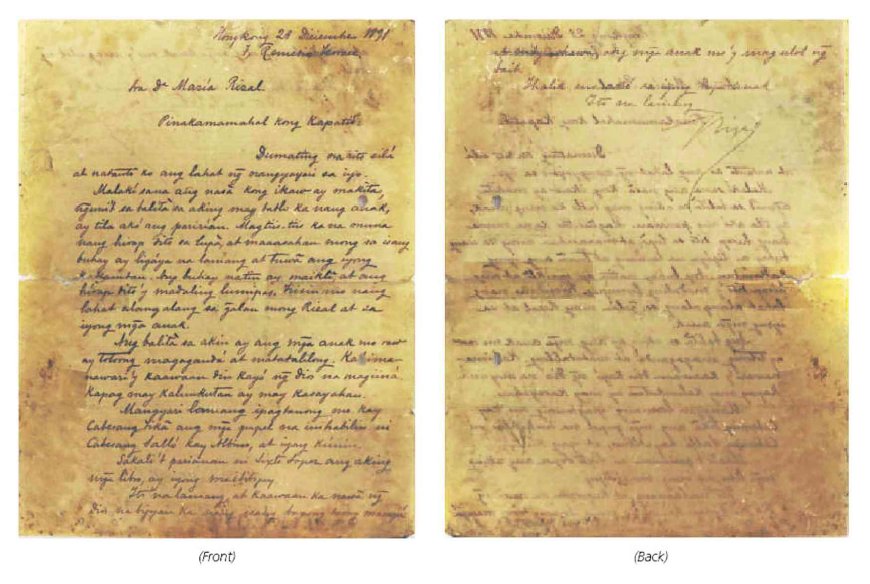
Most people who study a new language consider fluency in two or three an accomplishment worth being proud of. José Rizal was reportedly fluent in twenty-two. This wasn't a party trick or an idle hobby, it was a practical, deliberate tool that allowed him to read original texts, correspond directly with scholars across multiple continents, and access ideas that would have otherwise been filtered through translation and delay.
The Full Range of Languages
According to widely cited historical accounts, Rizal achieved fluency or strong proficiency in twenty-two languages and dialects over the course of his life, including Tagalog, Spanish, English, French, German, Latin, Greek, Italian, Portuguese, Dutch, Japanese, Chinese, Arabic, Malay, Sanskrit, Hebrew, Catalan, Swedish, Russian, and several Philippine regional languages, including Ilokano, Bisayan, and Subanon.
This range wasn't accumulated evenly or casually. Some languages, like Spanish and Latin, were foundational to his early education at the Ateneo. Others, like German and French, became essential during his years studying medicine in Europe. Still others, like Japanese, Sanskrit, and various Philippine regional languages, reflect a curiosity that extended well beyond what his formal education or immediate practical needs required.
Language as a Tool, Not Just a Talent
What set Rizal apart wasn't simply the number of languages he knew, but how deliberately he put that knowledge to use. His linguistic range allowed him to study medicine directly under German and Spanish professors without relying on translators, to research centuries-old Spanish colonial texts like Antonio de Morga's Sucesos de las Islas Filipinas in their original language, and to correspond fluently with an international network of friends and scholars, including his close friend Ferdinand Blumentritt in German.
This mattered enormously for his broader mission. Colonial authorities often justified their rule partly by portraying Filipinos as intellectually limited. Rizal's fluency across so many languages, many of them associated with Europe's most respected scholarly and scientific traditions, functioned as direct, difficult-to-dismiss evidence against that narrative.
Roots in an Educated Household
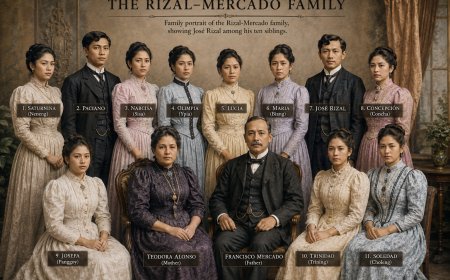
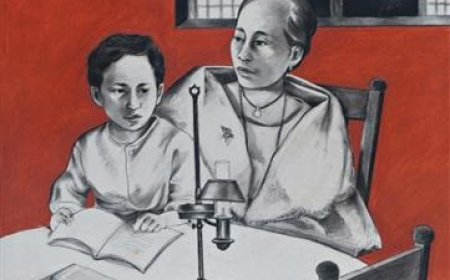
Rizal's linguistic gifts were nurtured early, starting at home. His mother, Teodora Alonso, was well-educated for her time and taught him to read from a very young age, laying an early foundation for the disciplined study habits he would later apply to language learning. This early nurturing, combined with the rigorous classical education he received at the Ateneo Municipal de Manila, where Latin, Greek, and Spanish were core subjects, gave him both the aptitude and the structured training needed to build on that foundation throughout his life.
Translation as Advocacy
Rizal didn't just consume knowledge across multiple languages, he also worked to make ideas more accessible by translating between them. He translated select literary works into Tagalog, reflecting his broader belief that access to knowledge and literature in one's own language was essential to a nation's intellectual growth, a conviction closely tied to his broader philosophy that education was the true foundation of freedom.
A Global Toolkit for a Global Mission
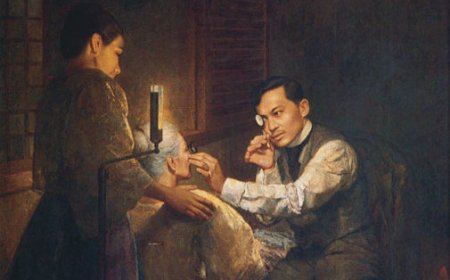
Rizal's linguistic range wasn't separate from his political and literary work, it was integral to it. His ability to move fluently between languages allowed him to build an international network of scholarly relationships, from his correspondence with Blumentritt to his engagement with German ophthalmology professors and British Museum archives. Few of his contemporaries, Filipino or otherwise, could operate with this level of ease across so many different linguistic and cultural contexts.
Why This Legacy Still Resonates
Rizal's mastery of more than twenty languages remains one of the most striking, if sometimes underappreciated, aspects of his biography. It wasn't simply an impressive personal achievement, it was a strategic asset that expanded his access to knowledge, strengthened his international relationships, and reinforced his broader argument that Filipino intellectual capability had no ceiling imposed by nature, only by the limited opportunities colonial rule chose to provide.
More than a century later, Rizal's linguistic range continues to serve as a powerful symbol within his broader legacy: proof that curiosity, discipline, and genuine hunger for knowledge can carry a single mind across an extraordinary number of cultures, systems, and ways of understanding the world.