Growing Up in a Large Family: Rizal Among His Ten Siblings
José Rizal grew up as the seventh of eleven children in a large, close-knit household in Calamba. His siblings — including Paciano, Trinidad, and several devoted sisters — remained closely connected to him throughout his education, exile, and even his final hours, shaping his empathy and sense of family loyalty. Discover José Rizal's life as one of eleven siblings in a large Filipino family. Learn about his brothers and sisters, their close bonds, and how growing up in a crowded, emotionally rich household shaped the man he became.
 Moderator - Tomas Kauer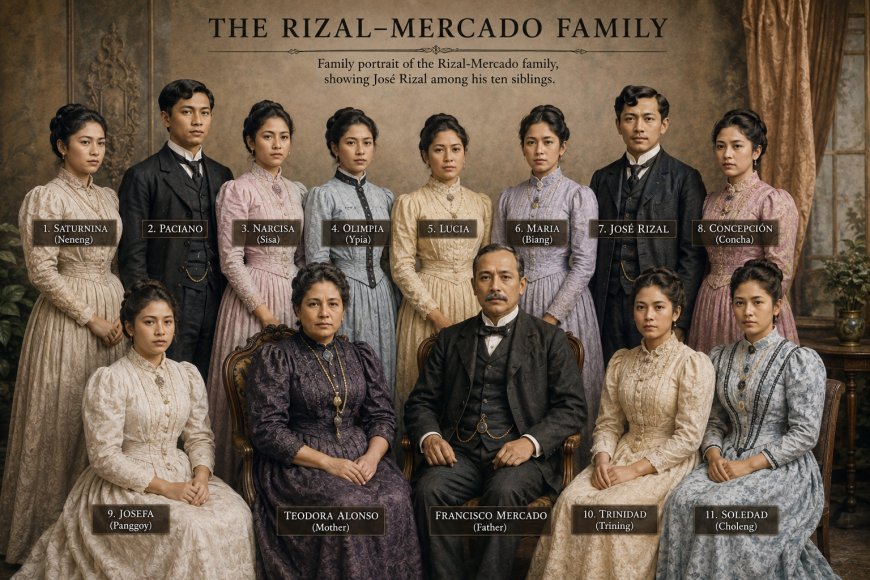
When people picture José Rizal, they often picture him as a singular figure — the lone genius, the solitary writer, the isolated exile in Dapitan. But long before any of that, he was simply one of eleven children, growing up in a bustling, crowded household in Calamba, Laguna. Understanding Rizal fully means understanding this often-overlooked detail: he wasn't raised in quiet isolation. He was raised in the middle of a large, lively family, shaped as much by his siblings as by his parents.
The Rizal Children
Francisco Mercado Rizal and Teodora Alonso raised eleven children together, with José as their seventh child and second son. His siblings, in birth order, were:
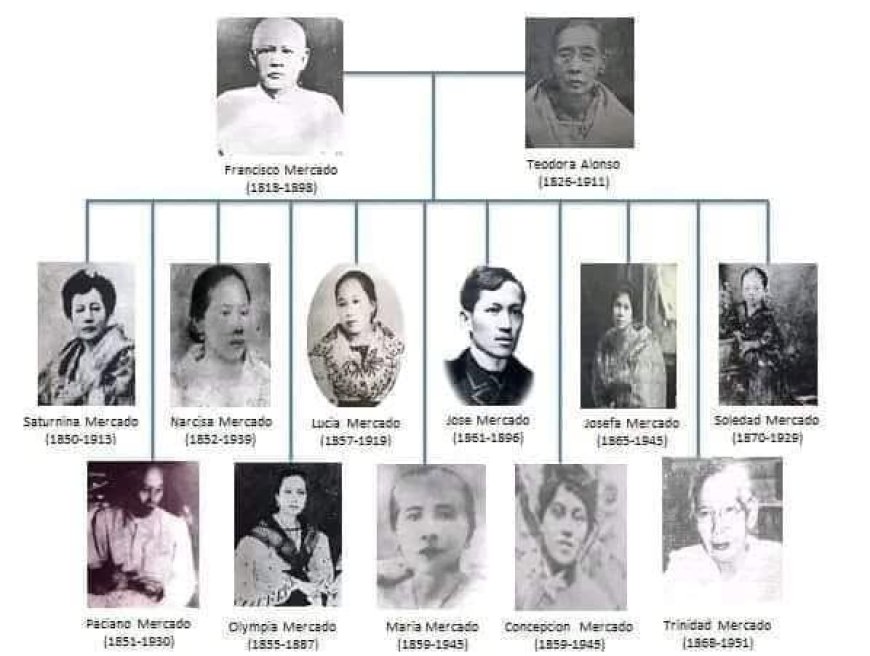
- Saturnina — the eldest, known for her steady, practical presence in the family.
- Paciano — the eldest son, whose political influence on José would prove historically significant.
- Narcisa — remembered for her warmth and closeness with José throughout his life.
- Olimpia — another of Rizal's elder sisters.
- Lucía — part of the close-knit group of Rizal sisters.
- María — another elder sister within the household.
- José — the second son, and the family member who would become the Philippines' national hero.
- Concepción — a younger sister who died in early childhood, a loss that affected the entire family.
- Josefa — remembered, along with several of her sisters, for remaining devoted to José throughout his life and after his death.
- Trinidad — the sister who would later receive Rizal's final poem, Mi Último Adiós, smuggled to her the night before his execution.
- Soledad — the youngest of the Rizal children.
A Household Full of Personalities
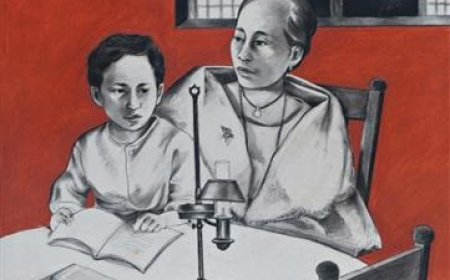
Growing up among ten siblings meant José's early life was anything but quiet. Large Filipino families of the era typically operated with a strong sense of shared responsibility, older children helping care for younger ones, and a household rhythm built around collective routines — chores, meals, prayers, and lessons woven throughout each day.
Rizal's numerous older sisters, in particular, are often noted by historians for the nurturing, attentive environment they helped create around him. Being one of the younger children in a household with several capable, engaged older sisters likely gave José additional attention, encouragement, and intellectual stimulation beyond what his parents alone could provide.
Sibling Bonds That Lasted a Lifetime
Despite the size of the family, several of Rizal's sibling relationships remained remarkably close throughout his life — most notably with Paciano, whose political and financial support shaped much of Rizal's education and worldview, and with Trinidad, whose bond with her brother proved significant even in his final hours.
His sisters, more broadly, remained deeply loyal to him throughout his years of study abroad, his exile in Dapitan, and his eventual imprisonment and execution. Letters between Rizal and various siblings reveal a family that stayed emotionally connected across enormous physical distances, offering him both practical updates from home and emotional support during difficult periods of isolation.
The Loss of Concepción
Not every part of growing up in a large family was warm or celebratory. The Rizal family also experienced real loss, including the early death of Concepción, one of José's younger sisters, who died in childhood. Losing a sibling at a young age would have been an early, formative encounter with grief for José, adding another layer of emotional depth to a household that, despite its size and warmth, was not immune to hardship.
Why This Matters
It's easy to think of historical figures as somewhat isolated from ordinary family dynamics — as if greatness develops in a vacuum. But Rizal's childhood tells a different story: he was one voice among many in a crowded, emotionally rich household, shaped by siblings who challenged him, supported him, grieved with him, and, in some cases, ultimately stood by him even in his final days.
Understanding Rizal as part of this large family adds important texture to his story. His empathy, his sense of responsibility, and his deep attachment to family and homeland weren't developed in isolation — they were shaped daily, from childhood onward, by the simple, ordinary experience of growing up surrounded by ten brothers and sisters.