Rizal's Childhood: Signs of Genius in a Small Laguna Town
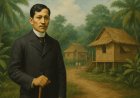
José Rizal's childhood in Calamba, Laguna, showed early signs of the mind he would become — reading by age three, writing his first poem after his pet bird died, and experimenting with drawing and sculpting. Nurtured by his mother's patience and his father's discipline, his early gifts were shaped as much by environment as by natural talent. Discover the childhood of José Rizal in Calamba, Laguna — from learning to read at an early age to his first poem and early artistic talents. Explore how his family environment helped shape the curious, observant boy who would become the Philippines' national hero.
 Moderator - Tomas Kauer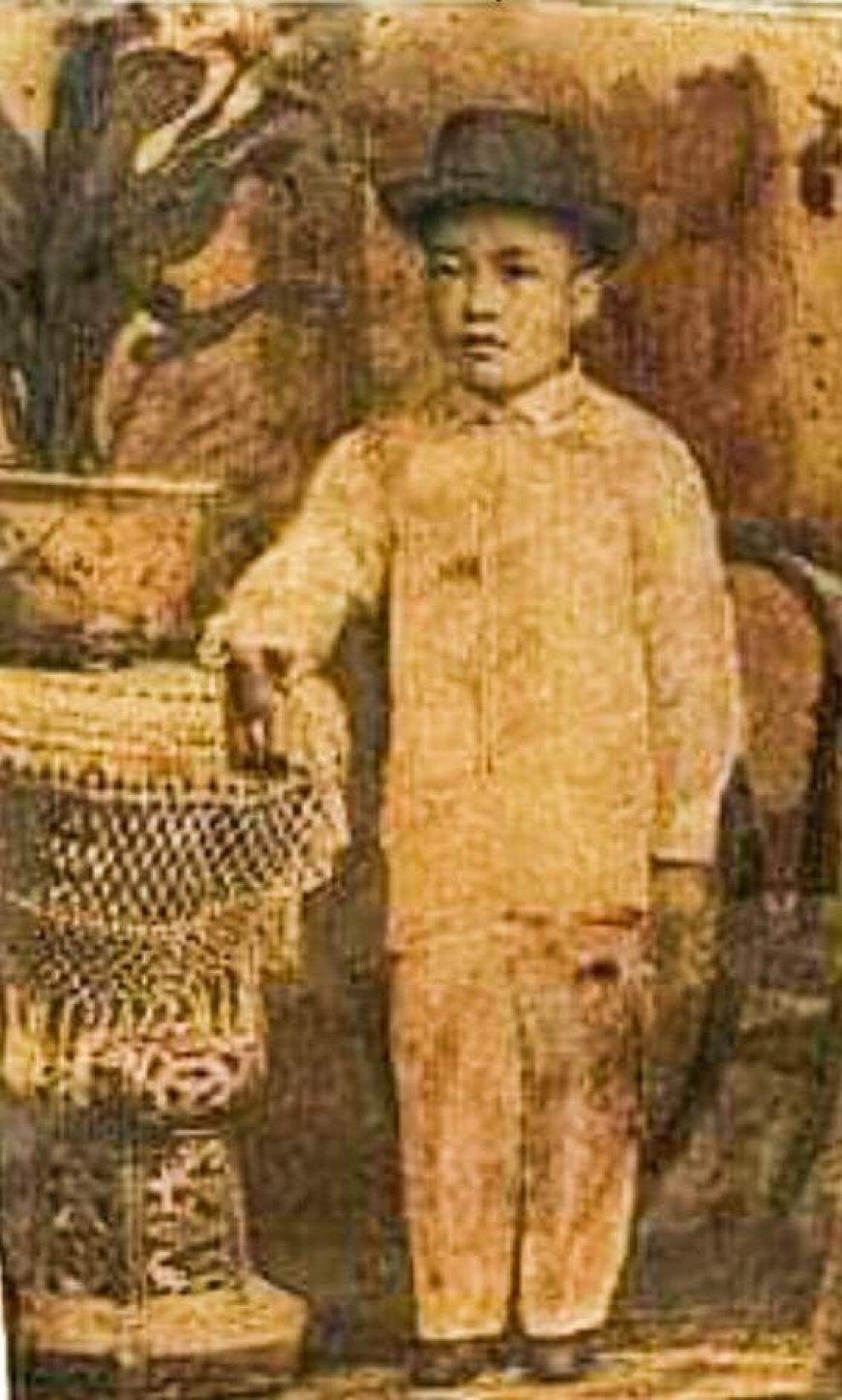
Most childhoods don't hint at greatness. Most children who learn to read early, ask a lot of questions, or enjoy quiet time with books grow up to lead perfectly ordinary lives — and there's nothing wrong with that. But every so often, looking back at a childhood after knowing how the story ends reveals small, telling details that seem to foreshadow everything that came after. José Rizal's early years in Calamba, Laguna, are exactly that kind of childhood — full of quiet, almost understated signs of the mind he would grow into.
An Unusually Early Start
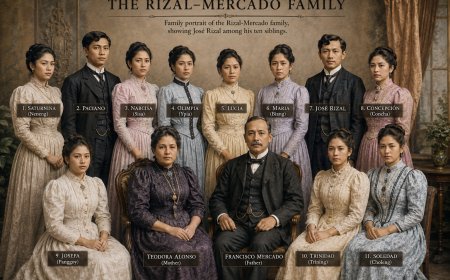
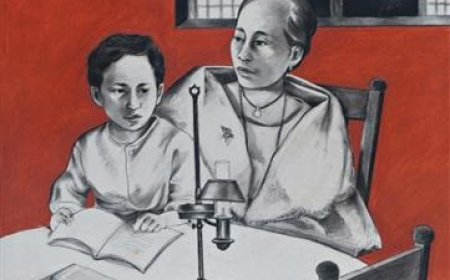
Rizal was born on June 19, 1861, in Calamba, Laguna, the seventh of eleven children. What set his early years apart almost immediately was how early his intellectual life began. According to most historical accounts, he could already read by the time he was around three years old, taught patiently by his mother, Teodora Alonso — a woman notably well-educated for her time, and Rizal's first and most influential teacher.
This wasn't simply about memorizing letters. Even as a small child, Rizal reportedly showed a genuine curiosity about language and stories, often asking his mother to read to him repeatedly and showing an early fascination with fables and poetry. It's a small detail, but a telling one: long before he wrote Noli Me Tángere or Mi Último Adiós, Rizal was already a child who loved words for their own sake.
A Sensitive, Observant Child
Beyond his early reading ability, accounts from those who knew him as a child describe Rizal as unusually observant and reflective for his age. He was known to notice details others might overlook — the behavior of animals, the way people spoke, the small injustices playing out in everyday life around him.
One often-cited early experience is the death of his pet bird, which is said to have deeply affected young José, prompting him to write a short poem about loss — a strikingly early example of turning personal emotion into written expression, a habit that would define much of his adult life.
A Quiet Talent for Art
Rizal's creative instincts weren't limited to words. As a child, he also showed an early talent for drawing and sculpting, often making small figures out of clay or wax. Family accounts describe him experimenting with sketches and simple carvings well before he received any formal art instruction — early evidence of the multidisciplinary mind that would later produce sketches, sculptures, and scientific illustrations alongside his written work.
A Family That Noticed
It's worth noting that Rizal's early gifts didn't go unnoticed by his family, particularly his parents. His mother continued to nurture his intellectual curiosity directly, while his father, Francisco Mercado Rizal, provided the disciplined household structure that gave those talents room to develop in a focused way. His older brother, Paciano, though more directly influential in Rizal's teenage and young adult years, was also part of a household culture that consistently prioritized learning and self-improvement.
This combination — a mother who nurtured curiosity, a father who enforced discipline, and a family environment that treated education as essential rather than optional — created fertile ground for whatever natural intelligence Rizal was born with to actually flourish.
Not Just a Prodigy — A Product of Environment
It would be easy to frame Rizal's childhood purely as a story of innate genius, but that framing misses something important: his early brilliance was also the product of a specific, intentional environment. Many children are naturally curious; not all of them are given a mother patient enough to teach them daily, a household disciplined enough to reinforce good habits, or a family financially stable enough to eventually afford advanced schooling.
Understanding Rizal's childhood this way makes his later achievements feel less like an isolated miracle and more like the natural, if extraordinary, result of curiosity meeting the right conditions to grow.
Why This Chapter Still Resonates
There's something quietly moving about the image of a toddler in Calamba, already captivated by stories, well before anyone could have predicted the role he would eventually play in Philippine history. Rizal's childhood reminds us that national heroes aren't born already knowing their purpose — they're shaped, slowly, by small moments: a mother's patience, a father's discipline, a child's curiosity about a dead bird, or a quiet afternoon spent shaping clay into something new.
Long before Rizal became a symbol, he was simply a boy in a small Laguna town, already, in his own quiet way, beginning to become himself.