Paris: Rizal's Pursuit of Ophthalmology and the Arts
In Paris from late 1885 to early 1886, José Rizal trained under renowned ophthalmologist Dr. Louis de Wecker, quickly mastering eye surgery techniques he would later use to treat his mother's cataracts. Outside the clinic, he became part of a close circle of Filipino artists, including Juan Luna, posing for Luna's paintings and developing his own artistic skills alongside his medical training. Discover José Rizal's four months in Paris, where he trained under Dr. Louis de Wecker to master eye surgery while immersing himself in the city's Filipino artistic community, including his close friendship with painter Juan Luna.
 Moderator - Tomas Kauer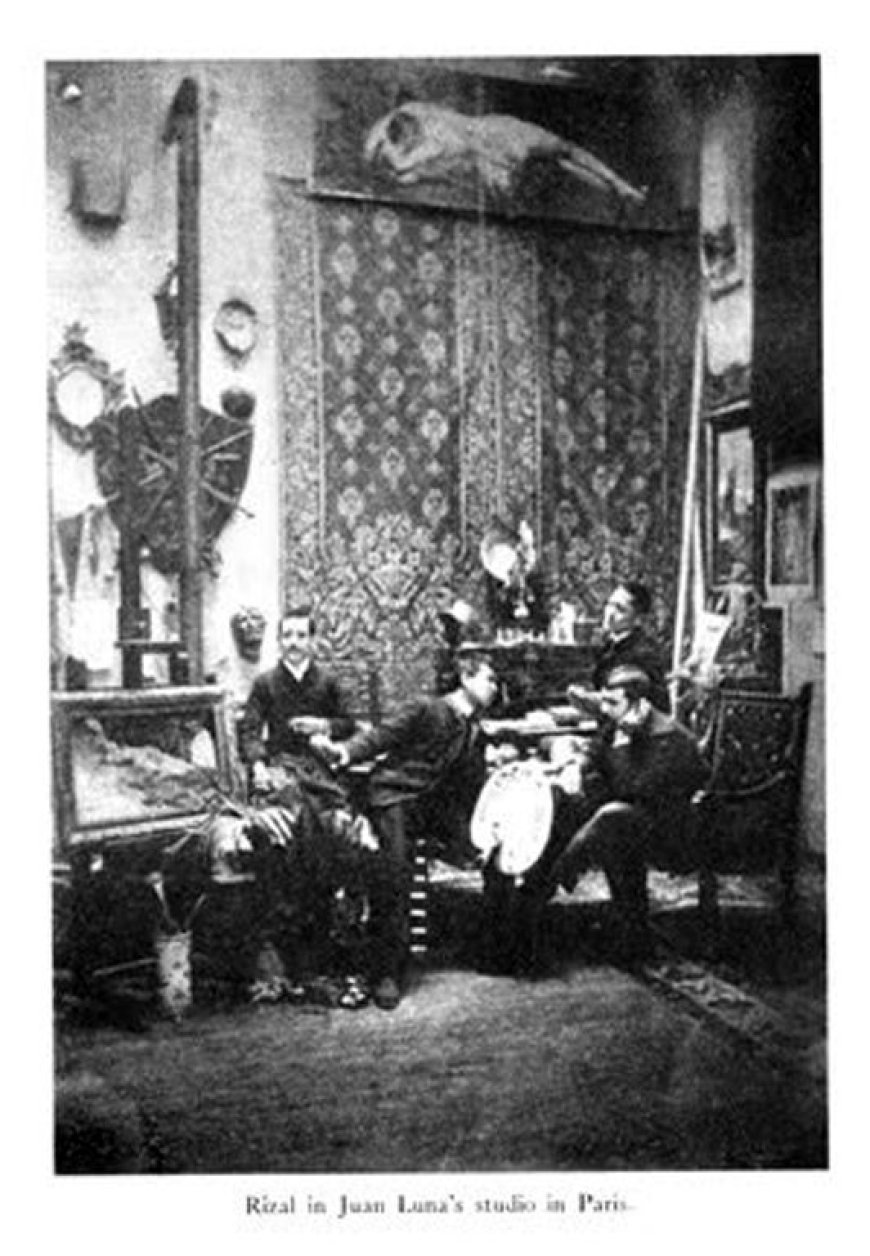
By the time José Rizal arrived in Paris in October 1885, he had already earned his medical degree in Madrid. What he hadn't yet gained was the specialized surgical skill he needed to actually help his mother, whose eyesight continued to fail. Paris offered exactly that opportunity — along with something else Rizal may not have expected: a vibrant circle of Filipino artists and intellectuals who would deepen his appreciation for the arts even as he sharpened his skills as a surgeon.
Training Under a Master Surgeon
On the recommendation of his brother Paciano, Rizal traveled to Paris to train under Dr. Louis de Wecker, one of the most respected ophthalmologists in Europe at the time. De Wecker ran a demanding clinic on Rue du Cherche-Midi, treating between fifty and one hundred patients a day, with some days involving as many as ten major operations. From November 1885 to February 1886, Rizal worked as de Wecker's assistant, immersing himself in the intense, high-volume clinical environment.
The training paid off quickly. In a letter home in January 1886, Rizal reported that he had already learned to perform the full range of eye operations, and simply needed more hands-on practice to deepen his understanding. By most accounts, de Wecker held Rizal in high regard, treating him with a level of personal attention not typically extended to visiting students — mentorship that gave Rizal genuine surgical mastery in a remarkably short period. The skills he developed during these four months would later allow him to perform cataract surgery on his own mother, restoring vision first in one eye and later the other.
Life Among Filipino Artists
Outside the demanding hours at de Wecker's clinic, Rizal's life in Paris took on a very different rhythm. He stayed for a time at the studio of fellow Filipino Juan Luna, on Boulevard Arago, and became a regular presence among a small but talented community of Filipino expatriates, including painter Félix Resurrección Hidalgo and the Pardo de Tavera siblings — Trinidad, Félix, and Paz.
This circle offered Rizal something rare: a space where medicine, politics, and art could exist side by side in ordinary conversation. At Luna's studio, Rizal spent many contented hours discussing painting techniques and artistic composition with one of the era's most accomplished Filipino painters, and in the process, sharpened his own long-standing interest in visual art.
Posing for Luna's Canvases
Rizal's connection to Luna went beyond conversation. He posed as a model for several of Luna's paintings during this period, including as an Egyptian priest in The Death of Cleopatra, and reportedly as the figure of Sikatuna in a depiction of the historic blood compact between early Filipino leaders and Spanish explorers — a fitting artistic role, given how much of Rizal's later writing would grapple with questions of Filipino identity and historical memory.
Rizal's own artistic instincts stayed active during this period as well. He created sketches, including illustrations in the personal album of Paz Pardo de Tavera, and painted decorative pieces reflecting scenes of Filipino life, continuing the kind of visual storytelling he had first experimented with as a child.
Financial Struggle Behind the Creativity
Despite the rich intellectual and artistic environment, Rizal's time in Paris wasn't without hardship. Letters between Rizal and Paciano reveal ongoing financial strain, with delays in the allowance meant to support his studies abroad. Living in Paris, ultimately, proved too costly to sustain for long, which contributed to Rizal's decision to continue his ophthalmology training elsewhere.
A Brief but Formative Chapter
By February 1886, Rizal left Paris for Germany, continuing his ophthalmological studies under Dr. Otto Becker in Heidelberg. Though his time in Paris lasted only a few months, it left a lasting mark on two very different aspects of his life: it gave him the precise surgical skill that would later allow him to fulfill his long-standing promise to help his mother, and it deepened his artistic sensibilities through close friendship with some of the era's most talented Filipino painters.
Why Paris Still Matters in Rizal's Story
Paris represents a rare moment in Rizal's life where his scientific and artistic sides developed almost side by side, reinforcing rather than competing with one another. The same disciplined focus he brought to mastering complex eye surgeries also showed up in his sketches and his engagement with Luna's paintings — a reminder that for Rizal, medicine and art were never separate pursuits, but complementary expressions of the same restless, observant mind.