Ateneo Municipal de Manila: The School That Shaped a Scholar
At just eleven years old, José Rizal entered the Ateneo Municipal de Manila, a Jesuit institution known for its rigorous curriculum in Latin, sciences, and rhetoric. He excelled academically, graduating in 1877 with a Bachelor of Arts and highest honors, while also developing early talents in poetry, drawing, and sculpture that would shape the rest of his life. Explore how the Ateneo Municipal de Manila shaped young José Rizal into a disciplined scholar. Learn about his rigorous Jesuit education, early mentors, and how this formative chapter prepared him for the achievements that followed.
 Moderator - Tomas Kauer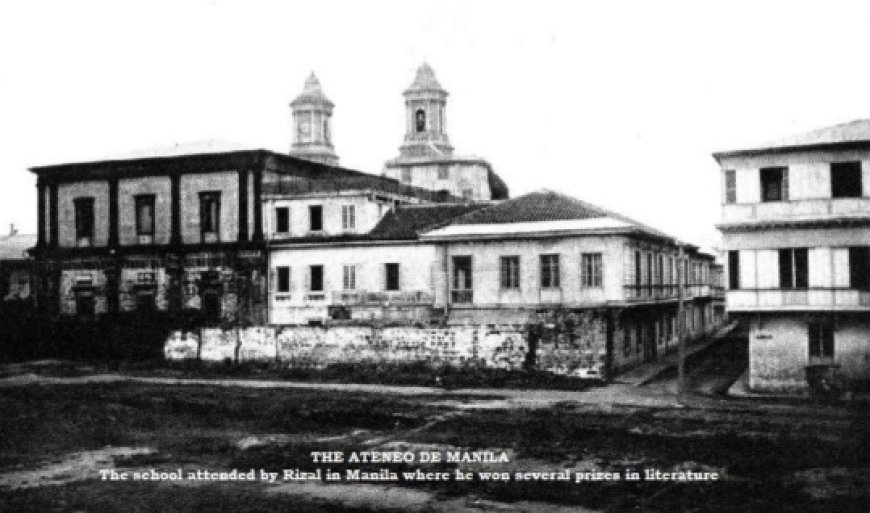
If Calamba and Biñan gave José Rizal the foundation of literacy and discipline, it was the Ateneo Municipal de Manila that took that raw potential and sharpened it into something extraordinary. Entering at just eleven years old, Rizal spent his formative teenage years within the walls of this Jesuit-run institution, emerging not just as a top student, but as a young man already showing the intellectual range and discipline that would define the rest of his life.
A Fresh Start in the City
In 1872, Rizal's family made the decision to send him to Manila to continue his education — a significant step for an eleven-year-old moving from provincial life in Laguna into the more demanding, urban environment of the capital. He enrolled at the Ateneo Municipal de Manila, a school run by Jesuit priests known for their rigorous academic standards and structured, disciplined approach to education.
This transition wasn't purely about geography. It marked Rizal's shift from small-town tutoring into a formal, competitive academic institution, where he would be measured against some of the brightest young students in the country.
A Curriculum Built for Rigor
The Ateneo's Jesuit educators emphasized a broad, classical education — Latin, Spanish, religion, mathematics, natural sciences, and rhetoric were all central to the curriculum, alongside a strong emphasis on discipline, moral formation, and academic excellence. Students were expected to demonstrate not just knowledge, but articulate reasoning and strong written and oral expression.
This kind of rigorous, multidisciplinary education suited Rizal remarkably well. He had already shown, even as a young child, a wide-ranging curiosity that extended beyond simple literacy into art, observation, and reflection. The Ateneo gave that curiosity a structured outlet, pushing him to develop real academic discipline alongside his natural talent.
Recognized Early as Exceptional
Rizal quickly distinguished himself at the Ateneo, consistently earning top marks and academic honors throughout his years there. Teachers and Jesuit mentors, including figures like Father Francisco de Paula Sánchez, are often credited with recognizing his literary talent early and encouraging him to pursue writing more seriously — mentorship that would prove significant given how central writing later became to Rizal's life's work.
Beyond academics, Rizal also began cultivating other interests during his Ateneo years, including poetry, drawing, and even early experiments in sculpture — foreshadowing the multidisciplinary "Renaissance man" reputation he would carry for the rest of his life.
Graduating with Highest Honors
In 1877, at the age of sixteen, Rizal completed his studies at the Ateneo Municipal de Manila, earning his Bachelor of Arts degree with highest honors — a remarkable achievement that confirmed what his teachers and family had likely suspected for years: this was not simply a bright student, but an exceptionally gifted one.
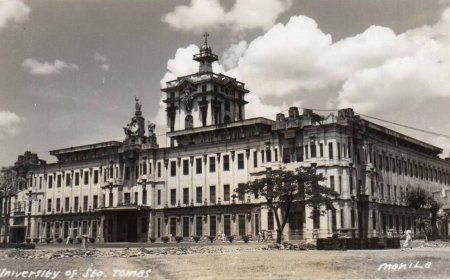
This accomplishment opened the door to his next chapter, as he moved on to the University of Santo Tomas to begin studies in Philosophy and Letters, and eventually Medicine — setting in motion the long educational journey that would eventually take him across Europe.
Why the Ateneo Years Matter
It's tempting to rush past Rizal's Ateneo years in favor of the more dramatic chapters that followed — his time in Europe, his novels, his exile. But the Ateneo years represent something crucial: the period when raw childhood curiosity was transformed into disciplined, rigorous scholarship. The structured Jesuit education he received didn't just fill his head with facts; it taught him how to think critically, express ideas clearly, and hold himself to a high standard of intellectual and moral discipline — skills that would prove absolutely essential once he began writing the works that would challenge an entire colonial system.
A Lasting Institutional Bond
The Ateneo Municipal de Manila eventually evolved into what is now Ateneo de Manila University, which continues to honor its connection to Rizal through commemorative markers, archives, and institutional pride in having played a foundational role in shaping one of the Philippines' most important historical figures. For an institution built on the Jesuit tradition of rigorous, values-driven education, there may be no more fitting alumnus to claim than the man who would go on to embody exactly those ideals in his fight for Filipino dignity and reform.