Biñan and Calamba: Where Rizal's Learning Began
José Rizal's education began not in a formal school, but at home in Calamba, where his mother Teodora Alonso taught him to read and write. At around age nine, he was sent to nearby Biñan to study under a private tutor, gaining his first taste of academic discipline and independence before moving on to Manila. Trace the earliest roots of José Rizal's education in Calamba and Biñan — from his mother's early lessons at home to his first formal schooling under a strict tutor, laying the foundation for the brilliance he would later show at the Ateneo and beyond.
 Moderator - Tomas Kauer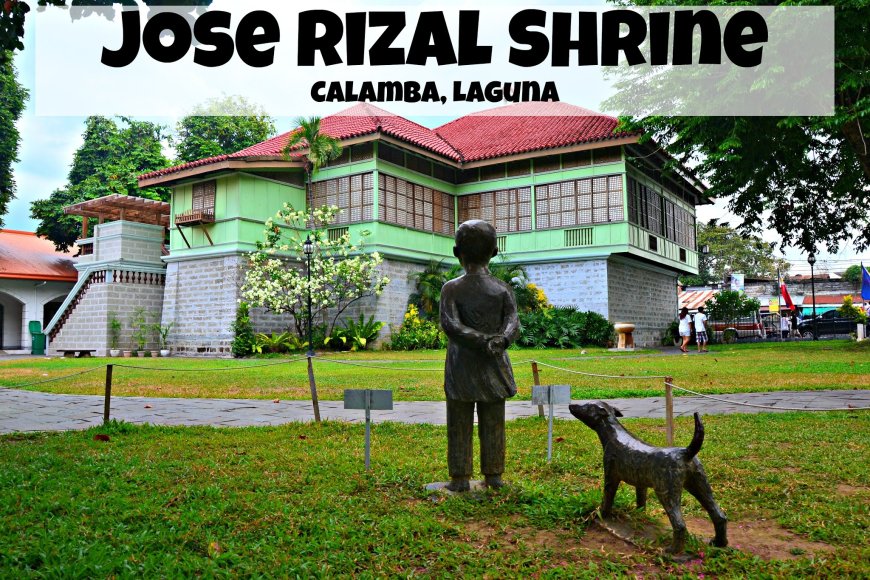
Long before José Rizal ever set foot in a European lecture hall, long before Ateneo, long before Madrid or Heidelberg, his education began in two small towns in Laguna — Calamba, where he was born, and Biñan, where he took his first real steps outside his mother's care into the world of formal schooling. It's easy to skip past this early chapter in favor of the more dramatic years abroad, but the truth is, everything that came later was built on the foundation laid in these two towns.
Calamba: The First Classroom Was Home
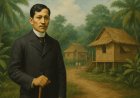
Rizal was born in Calamba, Laguna, on June 19, 1861, into a household that placed enormous value on learning. Long before any formal teacher entered the picture, his mother, Teodora Alonso, took on that role herself. She was remarkably well-educated for a woman of her time, and by most historical accounts, she taught young José how to read and write even before he reached school age.
This early home-based education wasn't just about literacy — it included storytelling, moral lessons, and an introduction to both Spanish and his native tongue. Some accounts even describe Teodora reading him stories and poems, quietly planting the seeds of the literary sensitivity that would define much of his later writing. In many ways, Calamba wasn't just his birthplace — it was his very first school, with his mother as headmistress.
His father, Francisco Mercado Rizal, reinforced this environment with discipline and structure, running a household where hard work and responsibility were expected of every child. Between his mother's intellectual nurturing and his father's steady discipline, Calamba gave Rizal both the curiosity and the work ethic he would carry with him for the rest of his life.
Biñan: Stepping Beyond the Family Home
At around age nine, Rizal was sent to Biñan, a nearby town, to continue his education under a private tutor — his first real experience of formal schooling outside his immediate family. This was a significant step for a boy his age, requiring him to live away from his parents and adjust to a more structured, disciplined academic environment.
In Biñan, Rizal studied under a teacher known for strict discipline, and it was here that his academic talents began to draw wider attention. He quickly distinguished himself as a bright, attentive student, excelling particularly in Latin and Spanish — skills that would later prove essential once he moved on to more advanced schooling in Manila.
Biñan is also where some of the earliest accounts of Rizal's competitive, driven nature begin to appear. Stories from this period describe a young boy eager to prove himself academically, even in the face of stricter, sometimes harsher teaching methods common at the time. Rather than being discouraged, Rizal seemed to thrive under the challenge, setting a pattern of resilience that would repeat itself throughout his later academic pursuits.
Small Towns, Big Foundations
It's tempting to treat Calamba and Biñan as mere footnotes before the "real" story of Rizal's education begins in Manila and Europe. But these two towns provided something that no university abroad could replicate: the earliest formation of his character. Calamba gave him love of learning and a strong moral compass. Biñan gave him his first taste of independence, discipline, and academic competition.
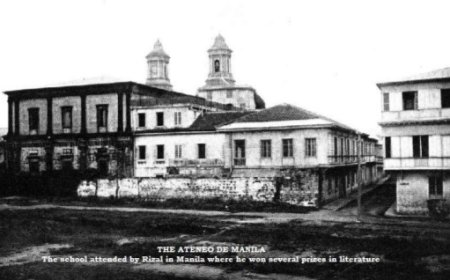
By the time he left for the Ateneo Municipal de Manila at age eleven, Rizal was already a confident reader and writer, comfortable navigating both Spanish and academic expectations — a head start that would prove essential in the demanding years of formal education that followed.
Why This Chapter Still Matters
Understanding Rizal's early years in Calamba and Biñan offers something valuable: a reminder that even a figure as accomplished as Rizal didn't emerge fully formed. His genius wasn't simply innate — it was cultivated, first at home, then in a small-town classroom, long before the world took notice. For anyone tracing the roots of his later brilliance, these two towns are where the story truly begins.