The Ideas of José Rizal: On Education, Freedom, Reform, Science, Religion, Ethics, and Nation-Building
José Rizal's writings reveal a coherent worldview built on the belief that lasting freedom starts in the mind. He saw education as the foundation of national dignity, favored peaceful reform over armed revolution (though he understood its limits), and embraced science as proof of Filipino capability. His critique of religion targeted friar corruption rather than faith itself, while his personal ethics emphasized honesty and discipline as prerequisites for genuine nation-building. Explore José Rizal's core ideas on education, freedom, reform, science, religion, ethics, and nation-building. This article unpacks the philosophy behind his novels and essays, showing how he believed real, lasting change for the Philippines had to begin with an educated, disciplined, and self-aware people.
 Moderator - Tomas Kauer
José Rizal is often reduced to a single image — the martyr who died for his country. But long before that final moment in Bagumbayan, he was a thinker who spent nearly two decades working out, in real time, what a free and dignified Filipino nation should actually look like. His views weren't handed down as a single manifesto. They're scattered across his novels, essays, letters, and annotations, but taken together, they form a surprisingly coherent worldview. This article walks through the core ideas that shaped how Rizal saw education, freedom, reform, science, religion, ethics, and the nation itself.
On Education
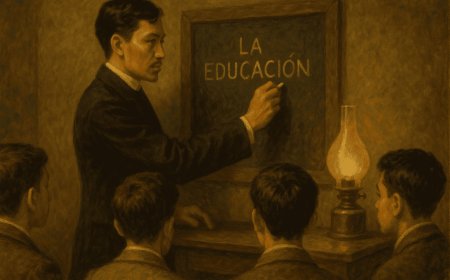
If there's one idea Rizal returned to again and again, it's this: a nation cannot be free if its people are uneducated. He believed that Spanish colonial policy deliberately limited access to real education for Filipinos — not because Filipinos were incapable, but because an educated population is harder to control.
In his essay "Sobre la Indolencia de los Filipinos," he directly challenged the colonial stereotype that Filipinos were naturally lazy, arguing instead that the supposed "indolence" was a manufactured condition — the predictable result of limited opportunity, poor education, and a system designed to keep people dependent rather than capable. For Rizal, education wasn't just about literacy. It was about restoring dignity and self-worth to a people who had been told, generation after generation, that they were lesser.
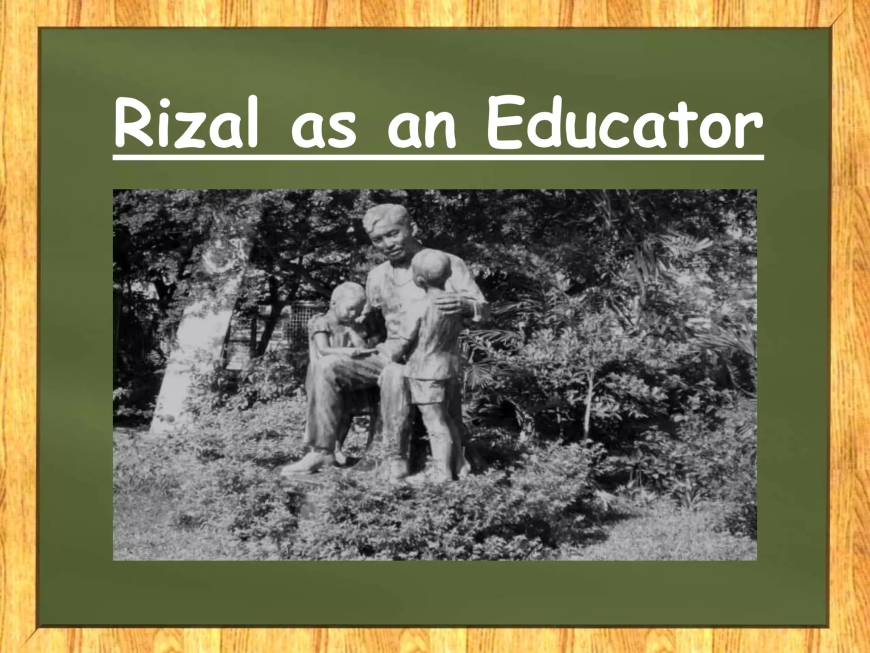
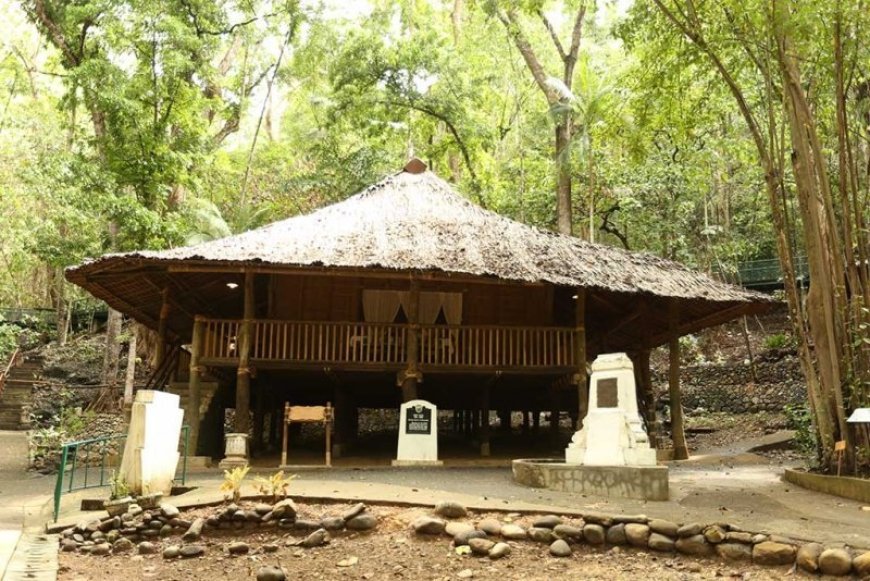
This belief is also why he built a school during his exile in Dapitan, teaching local boys not just academics but practical skills like farming, carpentry, and languages. For Rizal, education had to be useful, not just prestigious.
On Freedom
Rizal's idea of freedom was layered. It wasn't simply about removing Spanish rule — it was about a people becoming capable of governing themselves with maturity and responsibility. He was cautious about the idea that independence alone would solve everything. In his essay "Filipinas Dentro de Cien Años" ("The Philippines a Century Hence"), he predicted that Spanish colonial rule would eventually end, but he was equally concerned with what would come after — whether Filipinos would be prepared to build a just and stable society, or whether new forms of oppression might simply replace the old ones.
This is part of why Rizal is sometimes viewed as more cautious than revolutionary figures like Andrés Bonifacio. He didn't oppose the eventual outcome of freedom — he was concerned with the process, believing that freedom without preparation could collapse into chaos or new tyranny.
On Reform
Rizal firmly believed in reform through peaceful, legal means rather than armed uprising — at least for most of his life. He was a key figure in the Propaganda Movement, a group of Filipino intellectuals in Spain who pushed for changes like:
- Filipino representation in the Spanish Cortes (parliament)
- Equal rights and treatment under Spanish law
- Secularization of parishes (removing excessive friar control)
- Freedom of the press and assembly
His novels were themselves a reform strategy. Rather than organizing armed resistance, Rizal used Noli Me Tángere and El Filibusterismo to expose corruption and abuse to a wider audience, hoping that public pressure and awareness — both in the Philippines and in Spain — would force genuine change from within the system.
That said, Rizal wasn't naively optimistic. El Filibusterismo in particular shows him wrestling with the limits of reform, through the character of Simoun, who ultimately abandons peaceful methods altogether. Rizal doesn't fully endorse Simoun's path, but he also doesn't dismiss the frustration behind it.
On Science
Rizal approached the world with a scientist's curiosity. Trained as a physician and ophthalmologist, he also studied botany, zoology, and anthropology, and he corresponded with European scholars on topics ranging from folklore to natural history. He collected specimens, sketched species, and even had a species of flying lizard and a species of frog named after him by fellow naturalists, in recognition of his contributions.
For Rizal, science and nationalism weren't separate pursuits — they were connected. He believed that Filipinos needed to master scientific and technical knowledge not just for its own sake, but to prove, definitively, that they were equals to any European nation. His annotations to Antonio de Morga's Sucesos de las Islas Filipinas reflect this same scientific rigor, applied to history: he used careful research and evidence to challenge colonial narratives about pre-colonial Filipino society, arguing that it was more advanced and organized than Spanish accounts had suggested.
On Religion
Rizal's relationship with religion is one of the more complicated parts of his legacy. He was raised Catholic and educated by Jesuits, and his writing shows deep familiarity with Catholic doctrine and imagery. However, he was fiercely critical of the friars — the Spanish religious orders who, in his view, had corrupted the practice of faith by using it as a tool of political and economic control rather than genuine spiritual guidance.
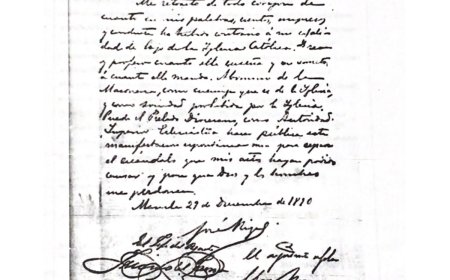
This distinction mattered greatly to Rizal: his criticism was aimed at institutional abuse, not at faith itself. His novels are filled with corrupt or hypocritical friar characters, but they're contrasted with the idea of a purer, more honest spirituality. There has long been debate among historians about whether Rizal died a devout Catholic — some point to a retraction document signed before his execution, while others question its authenticity or interpret it differently. What's less disputed is that Rizal's critique was always more about power and hypocrisy within the Church than about faith itself.
On Ethics
Rizal held himself, and by extension his fellow Filipinos, to a high ethical standard. He placed enormous value on honesty, self-discipline, and personal responsibility. He believed that moral character was inseparable from national progress — that a people who lacked integrity, discipline, or self-respect could never truly be free, no matter what political system governed them.
This ethical dimension shows up clearly in his personal life. He turned down opportunities to escape political danger by remaining engaged with reform efforts even when it put him at risk, and his final letters reveal a man deeply concerned with how his choices would be judged — not for the sake of his own reputation, but because he believed his conduct needed to model the values he hoped to instill in others.
On Nation-Building
For Rizal, nation-building wasn't just a political project — it was a cultural and psychological one. He believed Filipinos needed to reclaim a sense of shared identity and pride that colonization had systematically eroded. This is why his historical work mattered so much to him: by annotating Morga's centuries-old account of the Philippines, he was trying to remind Filipinos that their pre-colonial society had its own sophistication, governance, and culture, long before Spanish rule arrived.
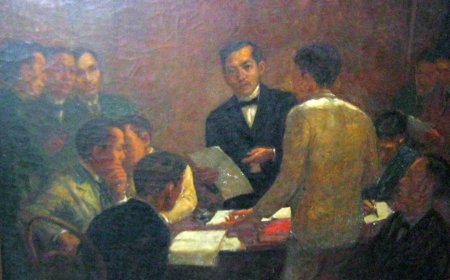
He also believed nation-building required unity across regions and social classes, something he tried to encourage through La Liga Filipina, the organization he founded shortly before his exile. Though short-lived, it aimed to unite Filipinos in mutual aid, education, and lawful reform — a small-scale model of the kind of cooperative, self-governing society he hoped the nation could eventually become.
Bringing It All Together
What ties all of these ideas together is a single underlying conviction: that real, lasting change happens in the mind before it happens anywhere else. Education builds capability. Science builds credibility. Ethics builds character. Reform builds momentum. And all of it, in Rizal's view, is what freedom and nation-building actually require — not just the removal of a colonizer, but the cultivation of a people ready to stand on their own.
More than a century after his death, these ideas are still debated, still taught, and still relevant — a testament to how much thought Rizal put into not just imagining a free Philippines, but figuring out what it would actually take to build one.