Rizal's Romantic Life: Leonor Rivera, Josephine Bracken, and the Women He Loved
José Rizal was romantically linked to at least nine women throughout his life, from his youthful, unrequited love for Segunda Katigbak to his eleven-year long-distance relationship with Leonor Rivera, and finally his partnership with Josephine Bracken in Dapitan. These relationships, marked by loyalty, cultural differences, and personal sacrifice, offer a more human dimension to Rizal's legacy beyond his public achievements. Explore José Rizal's romantic life, from his enduring love for Leonor Rivera to his final companion Josephine Bracken, revealing the personal relationships behind the Philippines' national hero.
 Moderator - Tomas Kauer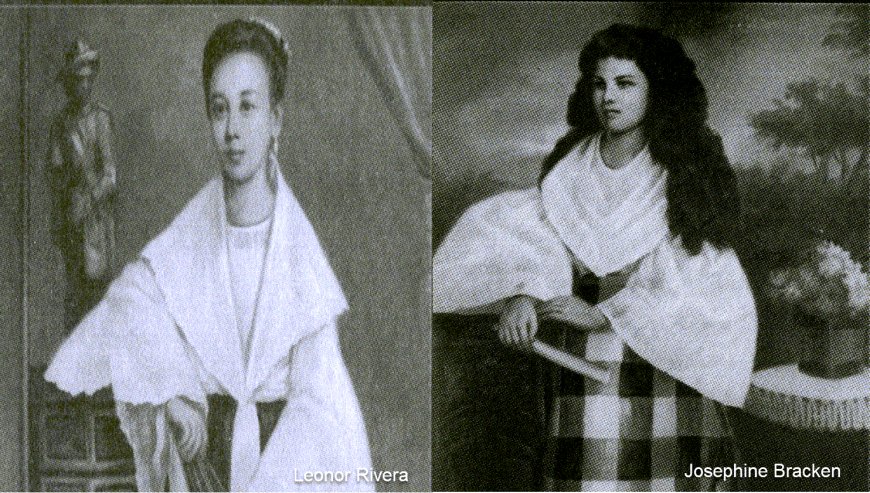
Behind the novels, the essays, and the martyrdom that define José Rizal's public legacy was a man who, like anyone else, fell in love, more than once, in more than one country, and not always successfully. Historians have linked Rizal to at least nine women over the course of his life, each relationship shaped by the particular circumstances of wherever his restless, wandering education and activism happened to take him. Taken together, these relationships offer a more personal, human dimension to a figure so often remembered primarily for his public achievements and eventual sacrifice.
Segunda Katigbak: A First, Unrequited Love
Rizal's earliest romantic interest was Segunda Katigbak, whom he met as a teenager. By most accounts, this youthful attraction went unfulfilled. Segunda was already engaged to another man from their hometown, and nothing beyond mutual admiration ever developed between them, an early lesson in romantic disappointment for a young man who would go on to experience several more.
Leonor Valenzuela: Notes Written in Invisible Ink
Around the same period, Rizal also courted Leonor Valenzuela, a tall young woman from Pagsanjan. Their courtship included a particularly memorable detail: Rizal reportedly sent her love notes written in invisible ink, decipherable only when held over the warmth of a lamp or candle, a small but telling glimpse of the same inventive, detail-oriented mind that would later produce his novels and scientific work.
Leonor Rivera: The Love That Lasted the Longest
Of all the women in Rizal's life, Leonor Rivera is widely regarded as his most significant and enduring romantic relationship. The two met when Leonor was just thirteen, studying at La Concordia College, and their relationship, sustained largely through letters once Rizal departed for Europe, lasted roughly eleven years.
Leonor is widely believed to have inspired the character of Maria Clara in Noli Me Tángere, the idealized Filipina heroine whose own story, like Rizal and Leonor's real relationship, is marked by heartbreak and separation. Leonor's mother, Silvestra Bauzon, strongly opposed the relationship, reportedly unwilling to see her daughter married to a man she considered dangerously radical. Letters between Rizal and Leonor eventually went unanswered, and Rizal later learned that Leonor had married Henry Kipping, a British railway engineer, a match her mother had reportedly encouraged in part by misleading Leonor into believing Rizal was already engaged to Ferdinand Blumentritt's daughter. Leonor died in 1893, still remembered by Rizal, by most historical accounts, as the love who influenced him most deeply.
Consuelo Ortiga: A Romance Deliberately Avoided
While studying in Madrid, Rizal grew close to Consuelo Ortiga, daughter of a former mayor of Manila, meeting her in 1882 and reportedly spending an entire evening in conversation with her not long after. Despite clear mutual attraction, and Consuelo's own interest in receiving romantic verses from him, Rizal deliberately chose not to pursue the relationship further, out of loyalty to Leonor Rivera back home, and out of respect for his close friend Eduardo de Lete, who was himself deeply in love with Consuelo.
O-Sei-San: A Connection in Japan
During his travels through Japan in 1888, Rizal formed a meaningful connection with Usui Seiko, known as O-Sei-San, the daughter of a samurai family, who taught him the Japanese art of sumi-e painting and helped him improve his Japanese. Their relationship reportedly grew serious enough that Rizal considered remaining in Japan, even reportedly weighing a lucrative position with the Spanish legation there, before ultimately deciding to continue his broader mission and travels rather than settle down in Japan.
Gertrude Beckett and Nellie Boustead: Connections in London and Europe
While conducting research in London, Rizal formed a connection with Gertrude Beckett, whose family he boarded with during his months studying at the British Museum. Later, in continental Europe, he grew close to Nellie Boustead, a relationship serious enough that Rizal reportedly considered proposing marriage. This relationship ultimately did not progress further, reportedly due to religious differences, as Nellie wished for Rizal to convert, and family disapproval from Nellie's mother regarding his financial prospects as a physician.
Suzanne Jacoby: A Quiet Chapter in Belgium
While living in Brussels and Ghent, working on the completion and publication of El Filibusterismo, Rizal is also linked to Suzanne Jacoby, a relationship generally described as calmer and more domestic in nature, occurring during a period of both literary focus and personal grief following the end of his relationship with Leonor Rivera.
Josephine Bracken: His Final Companion
Rizal's final and perhaps most personally significant relationship began in Dapitan in February 1895, when Josephine Bracken, an eighteen-year-old Irish woman, arrived with her adoptive father, George Taufer, seeking treatment for Taufer's failing eyesight. Though not conventionally regarded as a great beauty by contemporary accounts, Josephine's charm and warmth reportedly captivated Rizal during what had otherwise been a fairly isolated period of exile.
Their relationship developed into a genuine partnership, and though Rizal wished to marry her, complications arose, a local priest reportedly demanded that Rizal formally retract his criticism of the Catholic Church before agreeing to perform the ceremony, a condition Rizal was unwilling to meet at the time. Despite the lack of a formal Catholic wedding during this period, Josephine remained with Rizal in Dapitan, and some accounts suggest a Catholic marriage ceremony may have taken place shortly before his execution, connected to the broader, still-disputed retraction controversy surrounding his final hours. Josephine was present during Rizal's final imprisonment and is widely believed to be the "sweet stranger" referenced in the closing lines of Mi Último Adiós.
A Life of Genuine Connection, Not Careless Romance
It would be easy to reduce this list of relationships to a simple, uncharitable narrative, but the historical record suggests something more considered. Several of Rizal's romantic choices, particularly his decision to step back from Consuelo Ortiga out of loyalty to a friend, and his prolonged, letter-sustained devotion to Leonor Rivera across years of physical separation, reflect a man who took both loyalty and genuine emotional connection seriously, even while his larger political and literary mission frequently pulled him away from any one place, or person, for very long.
Why This Chapter of His Life Still Matters
Rizal's romantic life adds an important, humanizing dimension to a figure so often remembered primarily through the lens of martyrdom and national symbolism. These relationships, marked by long-distance devotion, deliberate self-restraint, cultural differences, and eventually, a genuine partnership found even amid the isolation of exile, remind us that behind the writer and reformist was someone navigating love, loss, and connection much like anyone else, even as the larger currents of history continued pulling him toward an entirely different kind of legacy.