Rizal Park (Luneta): The Site of His Execution and Final Resting Place
Rizal Park, or Luneta, in Manila stands on the former Bagumbayan field where José Rizal was executed on December 30, 1896. Today it holds the Rizal Monument, a granite obelisk completed in 1913 that serves as both a national memorial and his final resting place, guarded around the clock and the center of the annual Rizal Day wreath-laying. Visit Rizal Park (Luneta) in Manila, the site of José Rizal’s execution and the home of the Rizal Monument, where his remains rest and the nation gathers each year to honor his memory.
 Moderator - Tomas Kauer
Few places in the Philippines carry as much weight as Rizal Park, known to generations of Filipinos simply as Luneta. It is a public park where families picnic and children fly kites, but it is also the ground where José Rizal was executed on the morning of December 30, 1896, and the place where his remains now rest beneath a monument that has become one of the country's most recognizable landmarks.
From Bagumbayan to Luneta
In Rizal's time, the open field where he was executed was known as Bagumbayan, a stretch of land just outside the walls of Intramuros. It had long been used by the colonial government for public executions, including those of the three priests known as Gomburza in 1872, an event that had deeply shaped Rizal's own family and political awakening.
Over the following decades, the area was transformed into a public park. It became known as Luneta, and eventually Rizal Park, a large open green space in the heart of Manila that today serves as both a recreational area and a national shrine.
The Execution
On December 30, 1896, Rizal walked from his cell in Fort Santiago to Bagumbayan, accompanied by guards and a small group of people. He was executed by a firing squad. By several accounts, he asked to face the soldiers rather than be shot in the back, as traitors were typically executed, a request that was not granted. The execution was carried out before a large crowd, and it became one of the defining moments of the final years of Spanish colonial rule.
His body was buried hastily in an unmarked grave at Paco Cemetery, a decision commonly understood as an attempt by colonial authorities to prevent his grave from becoming a gathering place for sympathizers. His family later located the burial site, and in 1898 his remains were exhumed.
The Rizal Monument
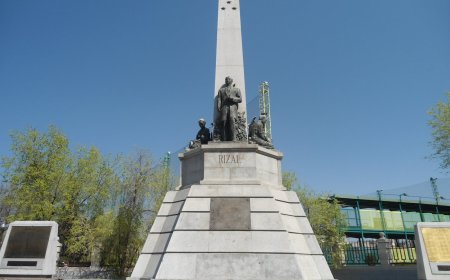
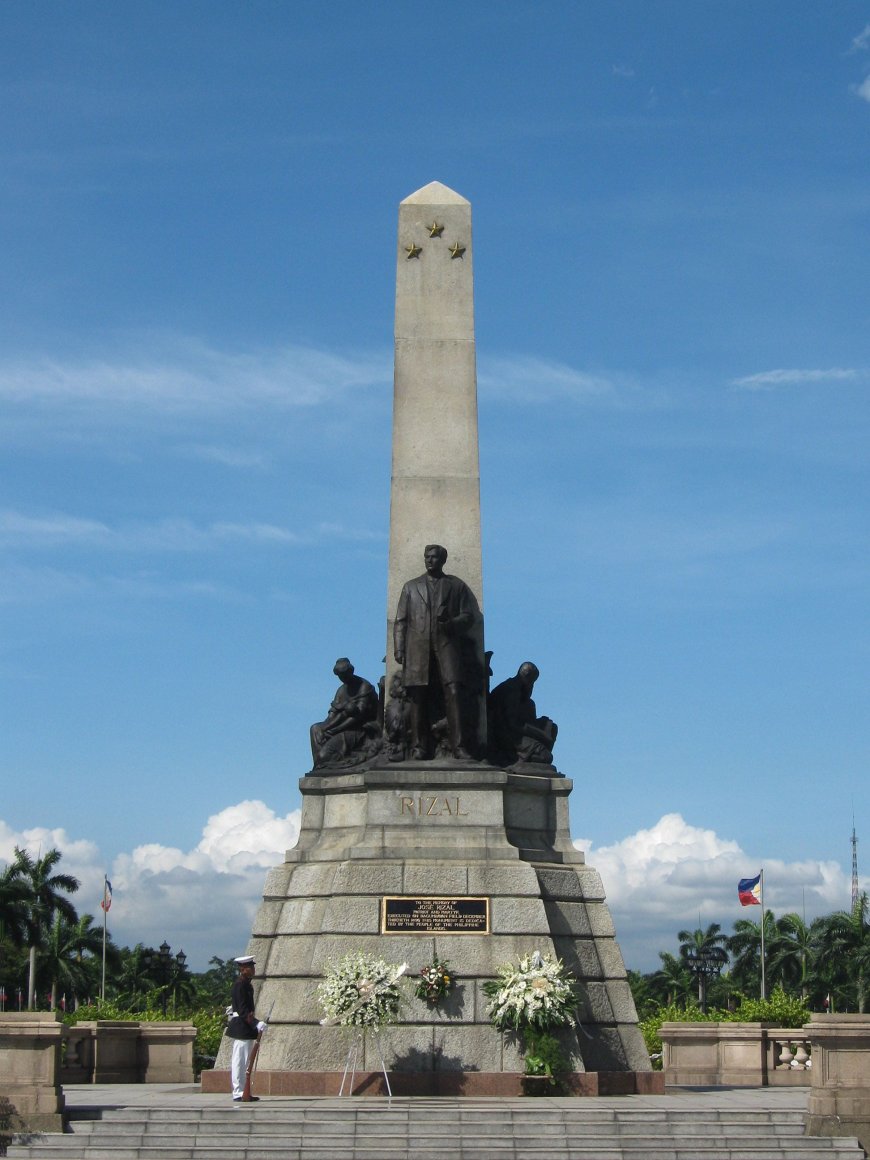
The centerpiece of the park today is the Rizal Monument, a granite obelisk topped with a bronze figure group, built to honor Rizal and to serve as his final resting place. An international design competition was held in the early 1900s, and the winning concept came from Swiss sculptor Richard Kissling, whose design features a tall granite pylon with a sculptural group representing the idea of a mother and child, symbolizing the motherland and its people. The monument was unveiled on December 30, 1913, on the anniversary of Rizal's execution.
Rizal's remains were placed within the monument's base, making it both a memorial and a tomb. A bronze statue of Rizal stands before the obelisk, and the monument's sides carry inscriptions honoring him.
Guarded Day and Night
The Rizal Monument is guarded around the clock by sentinels, a ceremonial duty that reflects the reverence in which the site is held. Visitors often watch the changing of the guard, and official delegations, including visiting heads of state, traditionally lay wreaths here. The Philippine President also leads the annual wreath-laying ceremony every December 30 on Rizal Day.
Nearby is the Kilometer Zero marker, the reference point from which distances to other places in the Philippines are measured. That placement is a quiet symbol of how central Rizal's memory is to the country's sense of itself.
More Than a Monument
Rizal Park is also a living public space. Beyond the monument, the park contains gardens, open lawns, and other features that draw visitors throughout the year, and it hosts concerts, public gatherings, and national commemorations. On weekends, it is one of the busiest public spaces in Manila.
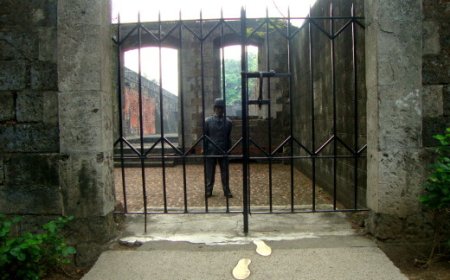
A short walk from the monument, visitors can also find displays and sculptural scenes depicting Rizal's final hours, which help connect the park's recreational atmosphere with its solemn history.
Why Luneta Still Matters
For Filipinos, Rizal Park is not just a landmark but a point of shared memory. It is where students are brought on field trips, where families gather on holidays, and where the nation formally pauses each year to remember the man whose death helped galvanize a revolution.
It also completes a physical journey that can be traced across Manila: from the cell at Fort Santiago, along the path marked by bronze footprints, to the field at Bagumbayan, and finally to the monument that now holds his remains. Walking that route offers something no textbook quite can, a sense of the distance, and the finality, of Rizal's last morning.
Note: Visiting hours, ceremonies, and the condition of exhibits at Rizal Park may change over time. We recommend checking with the National Parks Development Committee or the National Historical Commission of the Philippines for current visitor information.