Rizal on Education: Why He Believed Knowledge Was the Root of Freedom
José Rizal believed that a nation cannot be truly free without an educated population. He challenged the colonial stereotype of Filipino "indolence" as a manufactured effect of limited opportunity, and put his philosophy into practice by building a school during his exile in Dapitan — one that combined academics with practical skills. Explore José Rizal's belief that education is the foundation of freedom. Discover how his essays challenged colonial stereotypes, how he built an actual school during his exile in Dapitan, and why he saw knowledge as essential preparation for genuine nationhood.
 Moderator - Tomas Kauer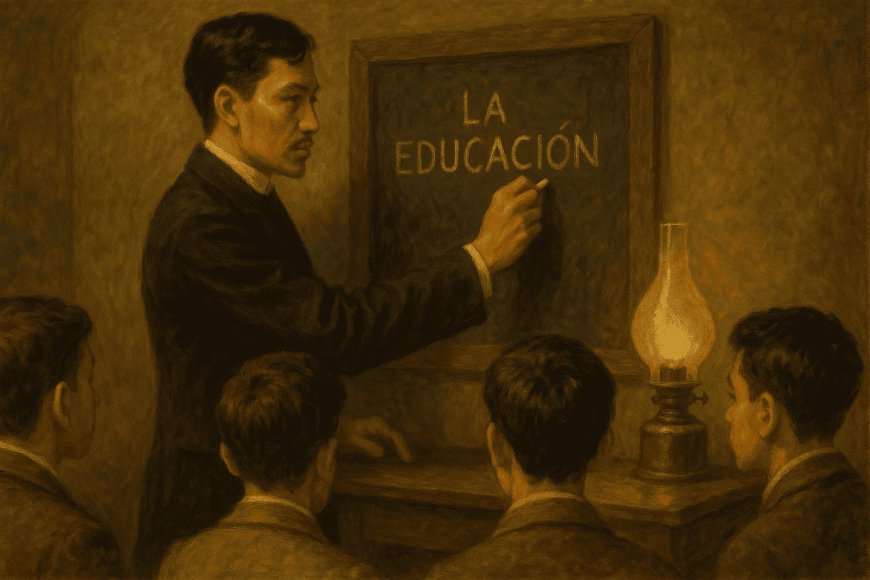
If you had to reduce José Rizal's entire worldview down to a single conviction, it would probably be this: a nation cannot be free if its people are kept ignorant. This idea runs through nearly everything he wrote, taught, and built — not as an abstract philosophical position, but as a practical, deeply personal belief shaped by his own life and by what he witnessed happening to his fellow Filipinos under colonial rule.
Education as a Form of Resistance
Under Spanish colonial rule, access to real, quality education for Filipinos was deliberately limited. Higher learning was largely reserved for the elite, and even then, curricula were often designed to reinforce loyalty to colonial and religious authority rather than to encourage independent thought. Rizal understood this system for what it was: not an accident, but a strategy. An uneducated population is easier to control, easier to convince of its own inferiority, and far less likely to organize effective resistance.
This is why Rizal treated the pursuit of education — his own, and his advocacy for it more broadly — as a quiet but deliberate act of resistance. Every degree he earned, every language he mastered, every scientific paper he contributed to, served as living proof against the colonial narrative that Filipinos were incapable of achieving what Europeans could.
Confronting the Myth of Filipino "Indolence"
Nowhere is this argument clearer than in Rizal's essay Sobre la Indolencia de los Filipinos ("On the Indolence of the Filipinos"). In it, he directly challenged the widespread colonial stereotype that Filipinos were naturally lazy or intellectually limited. Rather than accepting this framing, Rizal flipped the argument entirely: any perceived lack of ambition or productivity among Filipinos, he argued, wasn't a flaw in character — it was the predictable result of a system that denied people access to education, opportunity, and fair reward for their labor.
In other words, Rizal argued that the very stereotype used to justify colonial control was itself manufactured by the conditions colonialism created. Fix the access to education and opportunity, he suggested, and the supposed "indolence" would disappear — because it was never really about laziness to begin with.
Education in Practice: The School in Dapitan
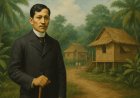
Rizal's belief in education wasn't confined to essays and theory. During his four years of exile in Dapitan, he built an actual school for local boys, teaching not just traditional academic subjects, but also practical skills like farming techniques, carpentry, and languages.
This is a telling detail: even while living under punishment, cut off from his broader political and literary circles, Rizal's instinct was still to teach. His approach to education in Dapitan also reveals something important about how he viewed learning — not as an elite pursuit reserved for the wealthy, but as something useful, applied, and accessible, aimed at genuinely improving people's lives rather than simply producing credentials.
Education and National Maturity
Rizal's writings also reveal a more cautious, layered view of what education was actually for. In his essay Filipinas Dentro de Cien Años ("The Philippines a Century Hence"), he predicted the eventual decline of Spanish colonial rule, but he was equally concerned with what would happen afterward. He worried that a population unprepared — educationally, civically, and morally — might simply trade one form of oppression for another, whether through internal corruption or vulnerability to a new foreign power.
This is part of why Rizal placed so much emphasis on education as preparation, not just liberation. For him, freedom wasn't only about removing colonial rule — it was about ensuring Filipinos were equipped to govern themselves wisely and justly once given the chance.
A Legacy Embedded in Philippine Education Itself
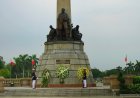
Rizal's belief in the transformative power of education became, in a fitting twist of history, deeply embedded in the very system he once criticized. Today, his novels and writings are required reading in Philippine schools, and Rizal Day serves as a national reminder of a man who saw literacy, critical thinking, and access to knowledge as the true foundation of national dignity.
His conviction continues to resonate well beyond his own historical context. In any society still grappling with unequal access to quality education, Rizal's argument remains strikingly relevant: that inequality is rarely about ability, and almost always about opportunity — and that real, lasting freedom has to start in the mind before it can ever take hold anywhere else.