Heidelberg: Rizal and Dr. Otto Becker's Ophthalmology Training
In Heidelberg from February to August 1886, José Rizal trained under renowned ophthalmologist Dr. Otto Becker, deepening his diagnostic and anatomical knowledge of the eye after already gaining surgical experience in Paris. This period also marked the beginning of his lifelong friendship with Ferdinand Blumentritt and progress on Noli Me Tángere. Discover José Rizal's ophthalmology training in Heidelberg under Dr. Otto Becker, a formative chapter that also sparked his friendship with Ferdinand Blumentritt and advanced the writing of Noli Me Tángere.
 Moderator - Tomas Kauer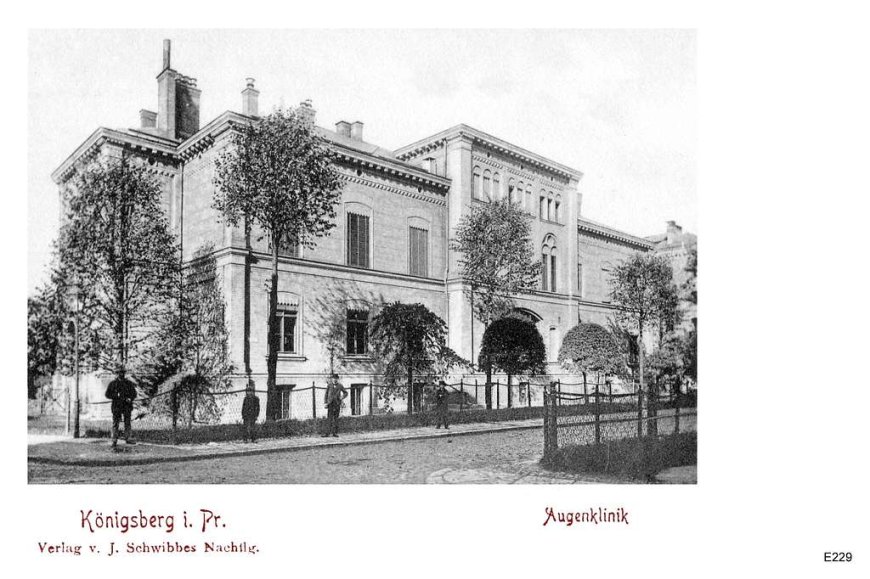
By the time José Rizal arrived in Heidelberg in February 1886, he already had months of hands-on surgical experience from his time assisting Dr. Louis de Wecker in Paris. What he still needed was a deeper theoretical foundation in ophthalmology itself, the kind of rigorous clinical training that only one of Europe's leading eye clinics could provide. He found it in Heidelberg, at the Augenklinik run by Dr. Otto Becker.
Finding the Right Mentor by Chance
Rizal's path to Becker wasn't the product of formal academic arrangement, but of a fairly ordinary conversation. Shortly after arriving in Heidelberg, he found himself among university students at a local pub and asked them who the best ophthalmology professors in the city were. Their answer pointed him directly to Otto Becker's Augenklinik, the university's eye clinic, setting in motion one of the most academically productive chapters of Rizal's medical education.
Who Was Otto Becker?
Dr. Otto Becker (1828–1890) was professor of ophthalmology at the University of Heidelberg from 1868 to 1890, and under his leadership the university's ophthalmology department became recognized as one of the finest in Germany. Becker was a serious scholar in his own right, having written extensively on the anatomy of the healthy and diseased eye lens and having personally collected more than 1,800 pathological specimens over the course of his career.
Because Rizal already held a medical license from Spain, he was permitted to attend Becker's lectures and observe clinical procedures at the Augenklinik, even without being formally enrolled as a degree-seeking student at Heidelberg University.
Six Months of Intensive Training
Rizal spent approximately six months, from February to August 1886, working as an assistant under Becker at the university eye clinic. Where his time in Paris under Dr. de Wecker had focused heavily on surgical technique, his months in Heidelberg rounded out his education with a stronger grounding in ophthalmological examination, diagnosis, and the underlying pathology of eye disease, exactly the kind of foundational knowledge Becker's decades of specimen collection and research had been built on.
This combination, hands-on surgical skill from Paris paired with rigorous diagnostic and anatomical training from Heidelberg, gave Rizal a genuinely comprehensive ophthalmological education by the standards of the period, preparing him for the eye surgeries he would later perform, including the cataract operations that helped restore his mother's vision.
Life Outside the Clinic
Rizal's time in Heidelberg wasn't confined entirely to the Augenklinik. He lived in a boarding house alongside German law students, and by most accounts became quite popular among them, in part due to his skill at chess. In May 1886, he took a break from his studies to visit nearby Wilhelmsfeld, where he made significant progress finishing the manuscript of Noli Me Tángere, and formed a lasting friendship with a local pastor, Karl Ullmer.
It was also during this period, in July 1886, that Rizal began his correspondence with Ferdinand Blumentritt, the Austrian scholar who would become one of his closest lifelong friends. What started as an exchange of academic interest in Philippine culture and history grew into one of the most significant intellectual friendships of Rizal's life, one that would continue for years afterward through hundreds of letters.
A Reluctant Departure
By August 1886, Rizal had completed his studies under Becker and, somewhat reluctantly, left Heidelberg for Leipzig to continue his broader European education, both scientifically and culturally. His time in the city, though only about six months long, left a lasting mark, reflected in poems he wrote during this period, including A las Flores de Heidelberg ("To the Flowers of Heidelberg"), composed in April 1886.
Why Heidelberg Matters in Rizal's Story
Heidelberg represents the point at which Rizal's ophthalmological training reached genuine academic and clinical maturity, built on the surgical foundation from Paris and refined under one of Germany's most respected specialists in the field. But the city's significance extends beyond medicine alone: it was here that Rizal deepened the friendship with Blumentritt that would shape much of his later intellectual life, and here that he made real progress on the novel that would soon change the course of Philippine history.
In this sense, Heidelberg captures something characteristic of Rizal's entire European education: even while focused intensely on a specific professional goal, he never stopped simultaneously building relationships, writing, and observing the world around him, always working on several fronts at once.