Rizal Studies as an Academic Field: Universities Leading the Research
Rizal studies occupies a unique position in the Philippines, mandated by the 1956 Rizal Law (RA 1425) as required coursework in every school, while remaining an active field of historical debate among scholars like Ambeth Ocampo. Historians continue to disagree on how to characterize Rizal's legacy, from Leon Ma. Guerrero's "First Filipino" framing to more critical readings questioning whether his reformist image was later shaped to serve particular political narratives. Explore Rizal studies as both mandatory Philippine education under the 1956 Rizal Law and an active field of historical scholarship, where researchers continue to debate his legacy, motivations, and place in Philippine national identity.
 Moderator - Tomas Kauer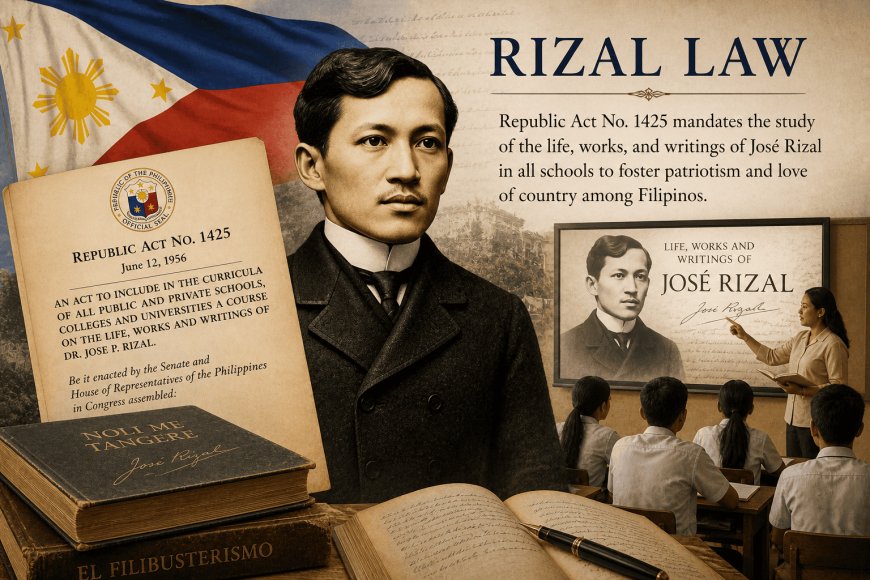
In most countries, studying a single historical figure across an entire academic career would be considered a niche specialization. In the Philippines, studying José Rizal is essentially mandatory. Thanks to a 1956 law that reshaped Philippine education, Rizal studies occupies a genuinely unique position: not just an area of specialized scholarly interest, but a required course every Filipino student encounters on their way through the education system, taught and researched at universities nationwide.
The Law That Built an Entire Field
The foundation of Rizal studies as an academic requirement traces back to the Rizal Law, officially known as Republic Act No. 1425, signed by President Ramon Magsaysay on June 12, 1956, Philippine Independence Day. The law mandates that all public and private schools, colleges, and universities in the Philippines include courses on Rizal's life, works, and writings in their curricula, with particular emphasis on his two novels, Noli Me Tángere and El Filibusterismo.
The law didn't stop at curriculum requirements. It also directed schools to maintain adequate library copies of the unexpurgated editions of Rizal's novels and other writings, and called for translations into English, Tagalog, and major regional Philippine languages, to be distributed affordably or free through public reading rooms. When passed, the law backed this mandate with an initial funding allocation of 300,000 pesos for printing and distribution, an unusually concrete fiscal commitment for what was, at its core, a curricular statute.
A Genuinely Controversial Law
Passing RA 1425 wasn't a quiet legislative formality. The bill faced significant opposition, particularly from Church-aligned senators including Francisco Rodrigo, Mariano Jesús Cuenco, and Decoroso Rosales, with some Catholic school leaders reportedly raising concerns, given the novels' sharp criticism of friar abuse. The law's eventual passage included a compromise: students who object on religious grounds may seek exemption specifically from reading the unexpurgated novels, though not from the Rizal course itself. Notably, according to historian Ambeth Ocampo, no student has ever formally availed of this exemption since the law took effect.
A Field Studied, and Debated, at Every Level
Because Rizal studies is mandated across the entire Philippine education system, from secondary school through university, it occupies a unique position: simultaneously one of the most widely taught subjects in the country and an active area of serious academic scholarship, with historians continuing to debate and reinterpret Rizal's legacy well beyond the standard classroom curriculum.
This ongoing scholarly debate is part of what keeps Rizal studies intellectually active rather than simply repetitive. Historians have long argued over how exactly to characterize Rizal's political legacy. Leon Ma. Guerrero famously referred to him as "the First Filipino," framing him as the architect of a unified national identity. Other historians, including Renato Constantino, offered a more critical reading, arguing that Rizal's elevation to national hero status was, in part, shaped to promote a reformist rather than revolutionary model of nationalism. Still others argue against drawing a sharp line between reform and revolution at all, viewing Rizal as a more radical figure than his cautious public advocacy might suggest.
Prominent Voices in Rizal Scholarship
Modern Rizal studies has been shaped considerably by historians who have dedicated substantial portions of their careers to reexamining his life and legacy. Ambeth Ocampo, one of the most widely recognized contemporary voices in Philippine historical scholarship, has written extensively on Rizal, often working directly with primary source documents and challenging simplified, textbook versions of his story in favor of more nuanced, evidence-based accounts.
Academic institutions across the Philippines continue to house significant Rizal-related archives, research collections, and scholarly activity, supporting ongoing historical research that goes well beyond what the mandatory coursework alone requires.
Why Rizal Studies Remains Distinct as a Field
What makes Rizal studies unusual, compared to how most countries handle the study of individual historical figures, is this dual identity: it functions simultaneously as compulsory civic education, meant to instill patriotism and national identity in every Filipino student, and as a genuinely contested area of historical scholarship, where serious researchers continue to debate his motivations, political philosophy, and even the authenticity of key historical documents, including his disputed final retraction.
This tension between mandated civic reverence and ongoing scholarly debate is, in many ways, fitting for someone whose own writing consistently modeled careful, evidence-based reasoning over simple, uncritical acceptance of official narratives.
Why This Field Still Matters
Nearly seventy years after the Rizal Law's passage, the mandatory study of Rizal continues to shape how generations of Filipinos understand their own national history and identity. At the same time, the continued scholarly debate among historians ensures that Rizal studies hasn't calcified into rote memorization, but remains a living field, one where new research, new interpretations, and even new archival discoveries continue to refine and complicate the picture of the man an entire country has been legally required to study for nearly seven decades.