Wilhelmsfeld and the German Chapter of Rizal's Education
Rizal’s German chapter, from Heidelberg to Berlin, was a broad education. In Wilhelmsfeld he stayed with Pastor Karl Ullmer’s family, learned German, and advanced Noli Me Tángere. In Leipzig he worked as a proofreader and translated Schiller’s Wilhelm Tell into Tagalog, and in Berlin he joined scientific circles and published his first novel in 1887. Trace José Rizal’s year in Germany, from the village of Wilhelmsfeld and his friendship with Pastor Ullmer to his translations in Leipzig and his scientific and literary breakthroughs in Berlin.
 Moderator - Tomas Kauer
When people talk about José Rizal's years in Germany, the conversation usually starts and ends with eye surgery and the publication of Noli Me Tángere. But his German chapter, roughly from early 1886 to mid-1887, was a much broader education. It took him from a quiet village vicarage near Heidelberg to a Leipzig print shop, and finally to the scientific societies of Berlin. Along the way he learned a new language, made lasting friendships, translated literature, and finished the novel that would change Philippine history.
A Chance Meeting on the Philosophers' Walk
Rizal arrived in Heidelberg in early 1886 to train in ophthalmology. According to the account preserved by the municipality of Wilhelmsfeld, his path to the nearby village began with a chance encounter. While walking on Heidelberg's Philosophenweg, he met Karl Ullmer, a Protestant pastor from Wilhelmsfeld, who invited him to visit.
Wilhelmsfeld, a small hillside village a short distance from Heidelberg, became Rizal's retreat. He stayed at the vicarage with Pastor Ullmer and his family. Sources differ on the exact length of the stay, some describing a summer-long visit and others marking its end in late June 1886, but all agree it was a warm and formative stretch. He reportedly celebrated his twenty-fifth birthday on June 19 with the parish family.
Learning German From the Inside
Life at the vicarage gave Rizal something no lecture hall could: daily immersion in German family life. He ate, talked, and walked with the Ullmers, and his German improved quickly. The result was visible within weeks. On July 31, 1886, he wrote his first letter in German to Ferdinand Blumentritt, the Austrian scholar who would become one of his closest friends. That correspondence, built on shared interests in Philippine history and languages, ran for years.
His time with the Ullmers also left an emotional mark. He stayed in touch with the family long afterward, and later letters show he remembered the village with real affection.
Writing Part of Noli Me Tángere
Wilhelmsfeld was also a place of work. Accounts of Rizal's itinerary credit this period with progress on the later chapters of Noli Me Tángere. The quiet setting, away from the constant demands of the clinic, gave him room to write. The final revisions would be completed in Berlin, but the novel's drafting had a significant stage in this German village.
Leipzig: Translation and Making Ends Meet
In August 1886, Rizal left Heidelberg and arrived in Leipzig on August 14. He stayed about two and a half months, partly because the cost of living there was among the cheapest in Europe. To support himself, he reportedly worked as a proofreader for a publisher, using his command of several languages.
Leipzig was also a place of literary work. He translated Friedrich Schiller's play Wilhelm Tell into Tagalog, so that Filipinos could read the story of Swiss resistance to foreign rule. He is also said to have translated Hans Christian Andersen's fairy tales into Tagalog for his nephews and niece. He attended lectures at the university and befriended scholars including the historian and geographer Friedrich Ratzel.
Berlin: Science, Hardship, and Publication
Rizal reached Berlin in early November 1886, after a stop in Dresden. Berlin offered what Heidelberg could not: a major scientific community. Through the support of scholars such as Rudolf Virchow, the renowned physician and anthropologist, he gained access to Berlin's learned societies, including its ethnological and geographical circles. He presented scholarly work, including a paper on Tagalog metrical art, and found a city whose scientific atmosphere he admired.
It was also a hard winter. Accounts describe real hardship: cold, thin meals, and money troubles as he worked to complete and publish Noli Me Tángere. Relief came when his friend Maximo Viola arrived and loaned him funds for printing. The novel was published in Berlin in March 1887, ending the German chapter on a landmark note.
What Germany Taught Him
Taken together, the German years show a distinct kind of education. Heidelberg gave him clinical depth. Wilhelmsfeld gave him a language, a home away from home, and quiet time to write. Leipzig tested his resourcefulness and broadened his reading and translation work. Berlin placed him among serious scientists and gave him the platform, and the push, to finish his novel.
He also observed German society closely, noting its discipline, its respect for learning, and, according to several accounts, a relative absence of the racial prejudice he had felt elsewhere. Those impressions fed into his thinking about what a prepared, educated nation could look like.
A Chapter Still Remembered in Wilhelmsfeld
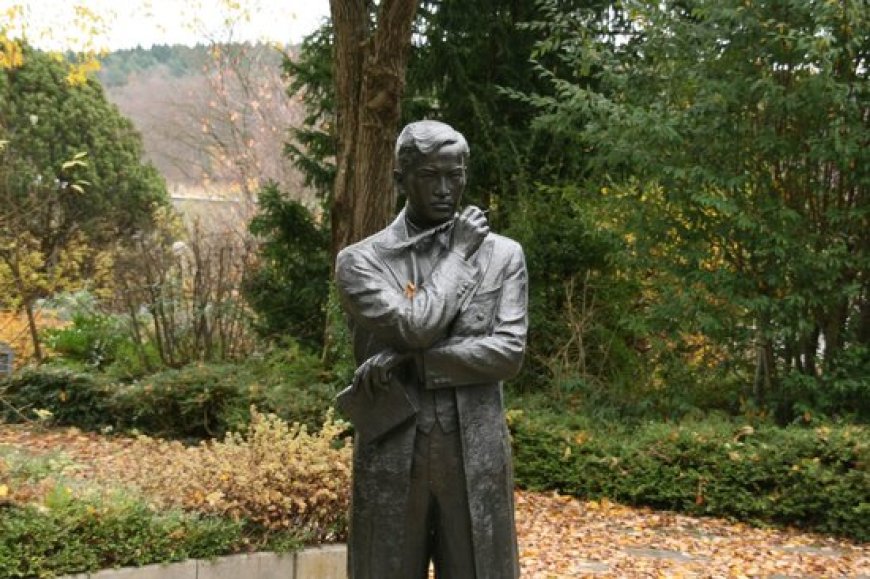
Today, Wilhelmsfeld remembers its famous guest. The village has a Rizal Park with a statue, and its municipal materials proudly retell his visit. For visitors tracing his life, it offers a rare chance to stand where a young doctor from Calamba spent part of his most productive year abroad.
Why the German Chapter Matters
Germany is often described as the place where Rizal finished his medical training and his first novel. That is true, but incomplete. It was also where he became a working translator, built an international friendship that shaped his later scholarship, and found a scientific community that treated him as a colleague. In a single year, a country he had barely known became one of the most formative stops of his education.
Note: Details such as exact dates and the length of Rizal's stay in Wilhelmsfeld vary slightly across sources. For visit planning, we recommend confirming current information with the municipality of Wilhelmsfeld or the Philippine Embassy in Germany.